Demre, Antalya — Akdeniz'in Saklı Cenneti☀️24°C Açık
St. Nicholas Church
Complete Guide · Demre, Antalya

St. Nicholas
Church

The burial church of the 4th-century bishop who became Santa Claus — 1,700 years of faith, frescoes, and an archaeological mystery still being solved.

1–1.5 hours visit
4.3/5 — 400+ reviews
📍Demre town center
Entrance Fee
€17
Opening Hours
8:30 – 19:00
Best Season
Apr – Jun & Dec
Museum Pass
✓ Accepted
Last Updated
Mar 2026
Bu Sayfada:
Genel Bakış

Where Faith Became Legend

Step below modern street level into the church where Saint Nicholas — the real Santa Claus — served as bishop, performed miracles, and was laid to rest seventeen centuries ago.

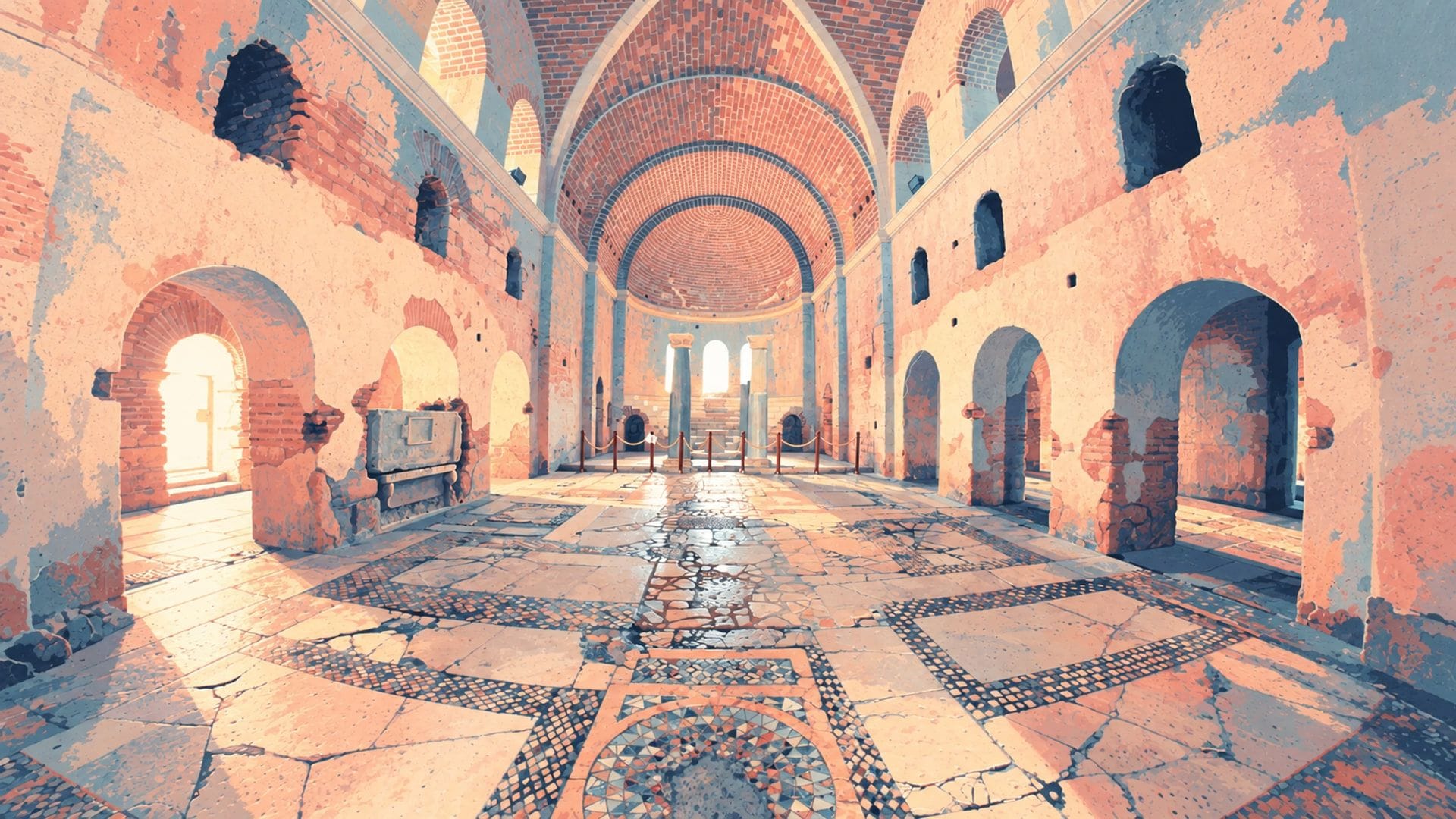
The Church of St. Nicholas (Noel Baba Kilisesi in Turkish) sits in the heart of Demre, built in AD 520 by Emperor Justinian I on the foundations of an even older chapel where Nicholas had ministered. Over the centuries, floods, earthquakes, and layers of silt the church several metres below today's ground level, creating the sunken sanctuary visitors experience today.

The basilica holds remarkable Byzantine wall frescoes depicting the saint's life and miracles, intricate 11th-century floor mosaics, and the stone sarcophagus believed to be the original burial place of Saint Nicholas before his remains were taken to Bari, Italy, in 1087. Side chapels reveal vibrant painted scenes that survived centuries underground.

Listed on UNESCO's tentative World Heritage list since 2000, the church continues to yield discoveries. In December 2024, excavations led by Assoc. Prof. Ebru Fatma Fındık uncovered a limestone sarcophagus beneath the basilica — approximately 2 metres long with a gabled lid, buried 1.5 metres below the mosaic floor. Carbon dating is underway to determine whether this is the saint's original burial. The "Legacy for the Future" project continues to add new chapters to one of Christianity's most enduring stories.

💡 Local Insight — Deniz

Most tour groups rush through in 20 minutes. Don't. Visit in the late afternoon when the groups have gone — the light through the upper windows creates a golden glow across the frescoes that you won't see midday. Pay attention to the floor mosaics near the apse; they're easy to miss but extraordinary. And step into each side chapel — the smaller ones often have the most vivid paintings.

Byzantine frescoes inside the nave
The saint's sarcophagus
Floor mosaics detail
What to See

Highlights of the Church

A Brief History

From Bishop to Santa Claus

c. 270 – 343 AD
The Life of Saint Nicholas
Born in Patara to a wealthy merchant family, Nicholas becomes Bishop of Myra. Known for his extraordinary generosity — secretly providing dowries for poor girls, protecting unjustly accused citizens, and calming storms at sea. Imprisoned during Diocletian's persecution, released under Constantine.
4th – 5th Century
First Church & Burial
After Nicholas dies in 343, he is buried in a church in Myra. His tomb quickly becomes a pilgrimage site. Miracles are attributed to the relics, drawing visitors from across the Byzantine Empire.
520 AD
Justinian's Basilica
Emperor Justinian I commissions the current basilica on the foundations of the earlier chapel. The church is expanded with a central nave, side aisles, apse, and the side chapels that survive today — a masterpiece of early Byzantine architecture.
1087
The Relic Theft
Italian sailors from Bari break open the sarcophagus and take most of Nicholas's remains to Italy, where they are enshrined in the Basilica di San Nicola. A few bone fragments are reportedly left behind, now displayed in the Antalya Archaeological Museum.
12th – 19th Century
Floods & Rediscovery
River flooding and silt gradually bury the church metres below ground level. In 1862, Czar Nicholas I of Russia funds restoration, adding a tower and bell. The church continues functioning until the 1923 population exchange.
1988 – 2023
Archaeological Renaissance
Hacettepe University (Prof. S. Yıldız Ötüken) begins systematic excavations revealing the monastery complex, Nicholas life-cycle frescoes in the northeast annex, and the original walking level of the church. UNESCO adds it to Turkey's tentative World Heritage list in 2000.
2024
The Sarcophagus Discovery
On December 6, 2024, the "Legacy for the Future" excavation led by Assoc. Prof. Ebru Fatma Fındık uncovers a limestone sarcophagus in the two-storey annex — ~2 metres long, gabled lid, buried 1.5 m below the mosaic floor, alongside lamp fragments and animal bones suggesting a ritual burial area. Carbon dating is underway. If confirmed, this could be the saint's original burial.
1,700+
Years of Pilgrimage
Ziyaretinizi Planlayın

Pratik Bilgiler

🎫
€17
Entrance
MuseumPass Türkiye E-Card (€165) and The Mediterranean E-Card (€90) are both accepted for free entry. Ticket booth at the entrance. Cash and card accepted. Skip-the-line tickets available online.
🕐
8:30 – 19:00
Summer Hours
April – October: 8:30 – 19:00. Winter (Nov – Mar): 8:30 – 17:00. Last entry 30 min before closing. Open every day including holidays.
🚶
Town Center
Getting There
Located in the heart of Demre, just off the main street. 10-minute walk from Myra Ancient City. Free parking nearby. Accessible entrance available for visitors with disabilities.
1 – 1.5 hrs
Time Needed
The church is compact but detail-rich. Audio guides available in multiple languages. Pilgrims and architecture enthusiasts may want 2 hours. Small cafe and gift shop at the entrance.
Yerel İpuçları

Tips for Your Visit

🌅
Late Afternoon Is Best
Tour buses depart by 15:00–16:00. Visit after that for a quieter, more contemplative experience. The afternoon light through the upper windows illuminates the frescoes beautifully.
🎄
December 6th Ceremony
St. Nicholas Day (December 6) features a special commemoration ceremony at the church. It's a moving experience, though expect larger crowds. Plan accommodation early for this period.
📸
Photography Tips
Flash photography is not allowed. The interior is dimly lit — a camera with good low-light performance helps. The best fresco photos come from the northeast annex chapels. A wide-angle lens captures the nave beautifully.
🎫
Museum Pass Strategy
In Demre alone a pass covers St. Nicholas Church (€17), Myra (€13) and Andriake (€4) — €34 of entrance fees. The Türkiye E-Card costs €165 and The Mediterranean E-Card €90, so a pass pays off only if Demre is one stop on a longer Turkish itinerary.
🗺️
Perfect Day Combo
Morning: Myra Ancient City (2 hrs) → Walk to St. Nicholas Church (1 hr) → Lunch in Demre center → Afternoon: Kekova boat tour from Cayagzi harbour (4 hrs). A complete Demre day.
Accessibility
The church has an accessible entrance and the main nave is on a single level. However, some side chapels involve steps. The sunken nature of the site means the entrance ramp descends below street level.
Combine Your Visit

What's Nearby

Common Questions

Frequently Asked

€17 (2026). The MuseumPass Türkiye E-Card (€165) and The Mediterranean E-Card (€90) are both accepted for free entry. Tickets at the entrance, cash and card accepted. A pass covers St. Nicholas (€17), Myra (€13) and Andriake (€4) — €34 of entrance fees in Demre, so it pays off only if you visit more sites elsewhere in Turkey.

Both, in a sense. Nicholas was originally buried here in 343 CE. In 1087, Italian sailors broke open the sarcophagus and took most of his remains to Bari, Italy. Some bone fragments were later taken to Venice. A small fragment is displayed in the Antalya Archaeological Museum. The 2024 sarcophagus discovery beneath the church may add new evidence — carbon dating is underway. Full story →

Yes — it's the same building. Locally known as Noel Baba Kilisesi (Santa Claus Church) or Noel Baba Müzesi (Santa Claus Museum). Saint Nicholas, the 4th-century Bishop of Myra whose generosity inspired the Santa Claus legend, was buried here. How Nicholas became Santa Claus →

Once a year — on December 6, St. Nicholas Day. An Orthodox liturgy is conducted by the Metropolitan of Myra, with religious leaders, officials, and pilgrims attending. It's the only day the church functions as a place of worship rather than a museum. Expect large crowds. Pilgrimage guide →

Not yet — but it has been on Turkey's UNESCO Tentative List since 2000. This means it's formally nominated but awaiting full inscription. The ongoing excavations (including the 2024 sarcophagus discovery) may strengthen the case for World Heritage status.

The frescoes in the northeast annex depict scenes from Saint Nicholas's life and miracles — the only surviving Nicholas life-cycle frescoes in Turkey. Other wall paintings show apostles, saints, and Christian iconography from the 11th century. They're faded but readable, especially in afternoon light. Architecture & frescoes guide →

Yes — in December 2024, a limestone sarcophagus was discovered beneath the basilica during the "Legacy for the Future" excavation. Approximately 2 metres long with a gabled lid, found 1.5 metres below the mosaic floor alongside lamp fragments and animal bones. Carbon dating is ongoing. Full excavation details →

Location

Find St. Nicholas Church on the Map

🗺️
Loading map...