Andriake
Ancient Port of Myra
Where Rome stored its grain, Paul boarded his ship, and Lycian civilisation found its museum — all in one ancient harbour.
Andriake: Where History, Nature & Sea Converge
Andriake is the ancient harbour city of Myra in Demre, Antalya — home to Hadrian's Granary (now the Lycian Civilizations Museum), Roman baths, a Byzantine-era synagogue, six early churches, and Çayağzı Beach. It's where Rome's grain trade, Lycian civilisation, sea turtle nesting grounds, and the departure point for Kekova boat tours all share the same stretch of coastline.
Five kilometres south of Demre centre, at the mouth of the ancient Andrakos River, Andriake served as Myra's harbour for over a millennium. The colossal Granarium built by Emperor Hadrian in 129–130 CE — one of only three surviving Roman grain warehouses of its scale, alongside Patara and Leptis Magna in Libya — has been restored and now houses the Lycian Civilizations Museum, with 1,476 artefacts across eight exhibition halls. Walking the archaeological site beyond the museum, you'll encounter the restored underground cistern, east and west Roman baths, a harbour agora, murex dye workshops with their distinctive shell mounds, a 5th-century synagogue discovered in 2010, and a monumental fountain visible from the Demre– road.
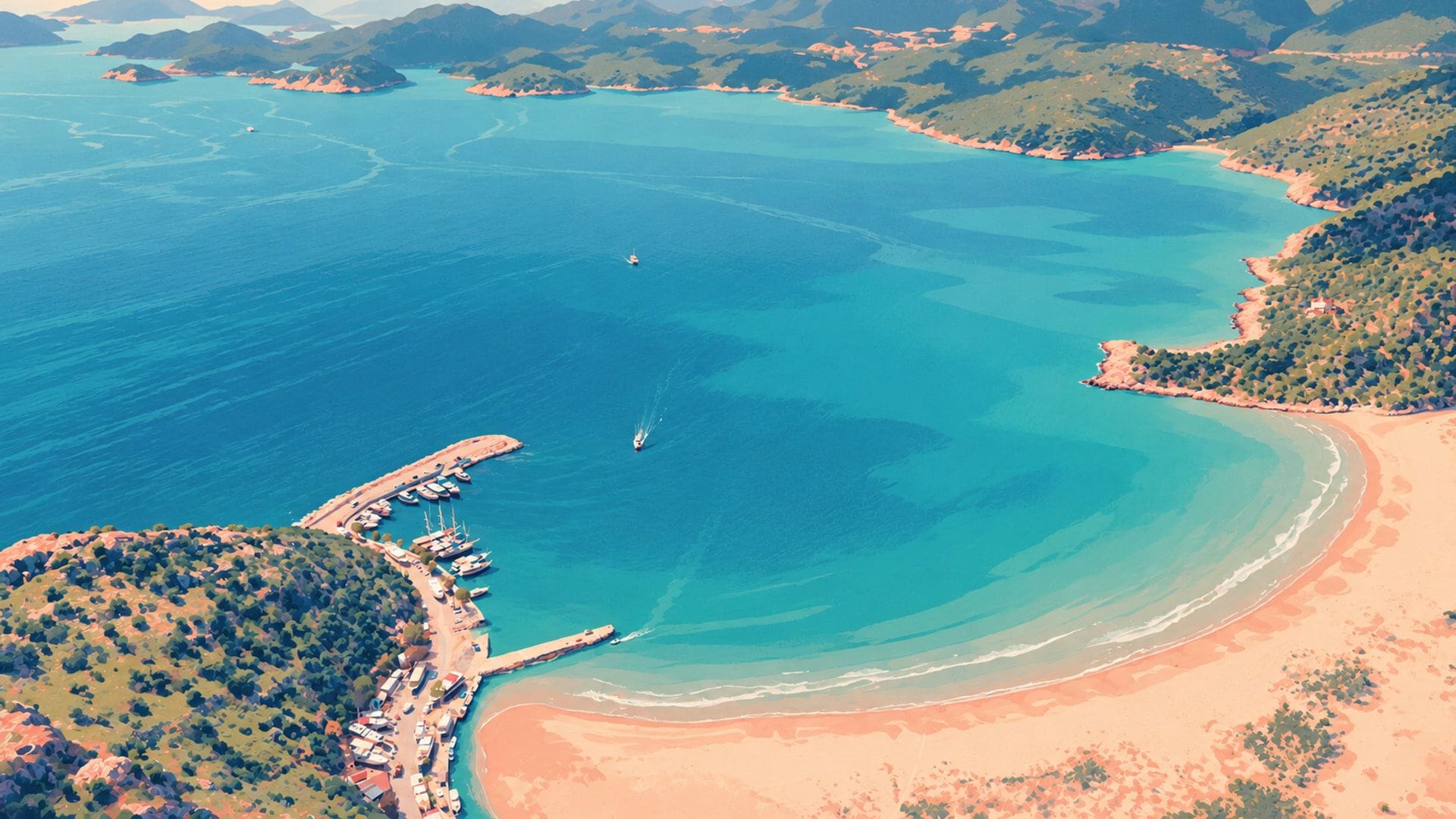
Beyond the ancient ruins, the bay opens into Çayağzı — a working harbour where fishing boats moor alongside Kekova tour gulets, a sandy beach where endangered Caretta caretta sea turtles nest each summer, and a reed-fringed wetland that hosts 149 documented bird species. The 1,476 artefacts inside the museum provide the context that makes Myra's , Kekova's sunken city, and St. Nicholas' legacy fully comprehensible — ideally, visit the museum first, then the sites. It's the most layered single destination in the .
I first visited the Granarium years before the museum opened — it was a roofless ruin, wildflowers growing between the stones, the Hadrian inscription half-buried in rubble. When the restored museum opened in 2016, I barely recognised the building. That transformation is Andriake's story in miniature: a place constantly being unearthed, constantly surprising. Most tourists drive straight past on the way to Myra — they don't realise the museum explains what they're about to see at Myra. Their loss, your opportunity.
Highlights of Andriake
History of Andriake: Myra's Gateway to the Sea
Practical Information
Tips for Your Visit
Explore Andriake Further
What's Nearby
Frequently Asked
The combined ticket for the archaeological site and Lycian Civilizations Museum is €4 per person. The MuseumPass Türkiye E-Card and The Mediterranean E-Card are accepted and cover both, as does the Müzekart for Turkish citizens. Children under 8 free.
Absolutely. It's the only museum in Turkey dedicated entirely to Lycian civilisation, housed inside a restored 2,000-year-old Roman granary. Eight halls, 1,476 artefacts, and the building itself is an exhibit. Most visitors spend 1–1.5 hours. Full museum guide →
5 km south of Demre centre, about 10 minutes by car. Follow signs to Çayağzı / Andriake. Free parking at the museum and beach. Limited dolmuş service — driving or taxi is more reliable.
Yes — it's one of the best half-day combinations. Start at the museum (context), drive to Myra (rock tombs & theatre), then return to Çayağzı Beach for a swim and lunch. Total: 3–5 hours.
Yes — Çayağzı Beach is a 1 km sandy beach next to the ruins. It's a Caretta caretta nesting ground (May–September). The adjacent wetland hosts 149 bird species. Basic facilities — bring your own supplies. Beach & nature guide →
Partially. The museum building has ramps and smooth floors. The archaeological site is mostly flat but unpaved — manageable with assistance on dry days. The cistern has steps. The beach has no specific accessibility infrastructure.
At Andriake harbour, around 59 CE (Acts 27:5–6). Paul transferred to an Alexandrian grain ship heading for Rome. The harbour area is visible in the archaeological site, and the museum's maritime hall explains the grain trade. Full St. Paul story →