Not Ölüdeniz — And That’s the Point
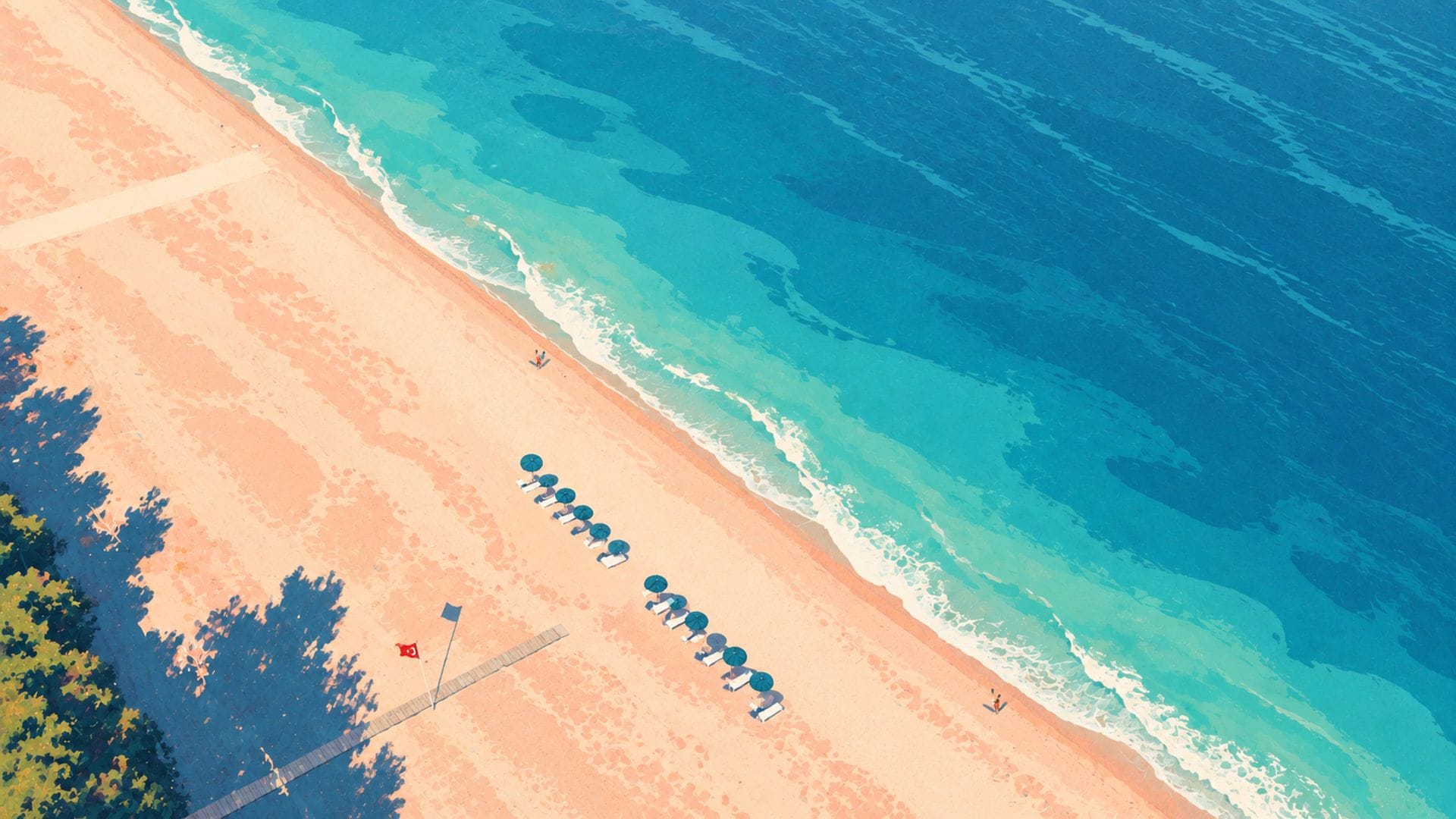
Let’s be direct: Demre is not a beach resort. There are no beach clubs with DJs, no parasailing operators, no rows of identical sunbeds stretching to the horizon. If that’s what you want, Antalya’s Lara Beach is three hours east and will oblige. But if you want to swim in water so clear you can count the pebbles three metres down, with a handful of Turkish families as your only company and a 2,300-year-old harbour ruin visible from your towel — then Demre’s coast is exactly right.
Demre’s beaches spread across roughly 20 kilometres of coastline between the Andriake river mouth in the east and the Kekova headlands in the west. Each has a distinct character: long sandy Çayağzı, where loggerhead turtles nest; the jewel-like cove of Sülüklü, tucked between pine-covered hills; the pebbly local favourite Taşdibi on the Kaş road; and the wide, organised sands of Beymelek further east. Beyond these, the boat-access bays of the Kekova coast offer swimming in a different league entirely — ancient shipyard ruins rising from the shallows while you float in turquoise water.
This guide covers every beach you can reach from Demre — by car, on foot, or by boat. For each one, you’ll find the honest details: surface type, facilities (or lack of them), how to get there, how crowded it gets, and who it’s best for. At the bottom, a comparison table puts them side by side so you can make a quick decision based on what matters to you.
Çayağzı Beach
Çayağzı is Demre’s main beach — and “main” here means the one that everyone knows about, not the one that’s overrun. The sandy shoreline stretches for roughly one kilometre along the coast just south of the Andriake archaeological site, making it possible to combine a morning of Roman ruins with an afternoon swim. The water entry is gentle and gradual, staying shallow for a long distance — the reason local families with young children favour it above all others.
The eastern end of the beach gives way to the small fishing harbour where Kekova-bound tour boats depart. You’ll see wooden gulets, weathered fishing boats, and the occasional sea kayak. The western stretch is quieter and more natural, backed by the Demre river estuary and the reed beds of the Andriake wetlands — a designated bird paradise with 149 recorded species. If you look up from your towel at the right moment between March and October, you might spot a kingfisher or a grey heron working the shallows.
Facilities are basic. There are a couple of beach-side restaurants near the harbour end serving fresh fish and cold drinks, and some seasonal umbrella/sunbed rentals in the central section — but don’t expect the infrastructure of an Antalya resort beach. Bring your own water, snacks, shade, and sunscreen. There are changing rooms and toilets near the car park. The beach itself is free to access; you only pay if you rent a sunbed.
Çayağzı is one of Turkey’s designated loggerhead turtle nesting beaches. Between May and September, marked nest areas are cordoned off — do not disturb them, do not use flash photography near the shore at night, and do not leave plastic or food waste on the beach. Hatchlings emerge in July and August, usually at dusk or dawn. For the full ecological story, turtle-watching etiquette, and birdwatching guide, see the dedicated Andriake Beach & Wetlands page.
Sülüklü Cove
If Çayağzı is Demre’s family beach, Sülüklü is its secret jewel. This small, sheltered cove sits between pine-covered headlands about 8 km west of the town centre, accessible by a narrow side road off the D400 Demre–Kaş highway. The water is extraordinary — clear enough to see fish darting over the rocky bottom from the shore, with that particular shade of turquoise that the Mediterranean produces where shallow limestone meets deep water.
The name Sülüklü translates as “the place of leeches” — not the most inviting name for a beach. It comes from the freshwater springs that once flowed into the cove from the hillside; in earlier times, leeches lived in these springs. The springs still trickle in wet seasons, but the leeches are long gone. What remains is a natural freshwater influence that keeps the bay slightly cooler and arguably even clearer than the open sea.
Access is by car or taxi only — there is no dolmuş service to Sülüklü. From the D400, follow the signposted side road south for about 2 km to a small car park. From there, it’s a short walk down to the beach. In peak summer (July–August), arrive before 10:00 to find parking. There is a small seasonal beach operation with sunbeds, umbrellas, and a simple café serving tea, cold drinks, and basic food. The western rocks are good for snorkelling — bring your own gear.
Demre’s beaches aren’t Ölüdeniz or Kaputaş — they won’t blow up your Instagram feed. And honestly, that’s their best quality. When I go to Sülüklü on a Tuesday afternoon in June, there might be three local families and a couple of fishermen on the rocks. Nobody’s taking selfies with a drone, nobody’s queuing for a sunbed. You spread your towel, you swim, you eat the watermelon you brought in the car, and you watch the light change on the hills. That’s a Demre beach day. If it sounds boring, this isn’t your coast. If it sounds perfect — welcome.
Taşdibi Beach
Taşdibi sits on the Demre–Kaş road, about 10 km west of the town centre. Its name means “bottom of the stones,” which is an accurate description — this is a pebble beach, not a sandy one. The stones are smooth and mostly small, comfortable enough with beach shoes or a thick towel. What Taşdibi lacks in soft sand it compensates for in water clarity: the pebbly bottom means no sand in suspension, and the water is an almost absurd shade of aquamarine.
This is the least touristy beach in Demre. You’ll find locals swimming here after work in the long summer evenings, campervans parked along the roadside, and the occasional Lycian Way hiker stopping for a midday dip. There is a small beach-club-style operation at the eastern end with sunbeds, umbrellas, and a simple restaurant — the kind of place where you can get a beer and a plate of grilled fish while looking at the water. The rest of the shoreline is natural and unserviced.
Getting there is straightforward — Taşdibi is right on the D400 highway, so any bus or dolmuş heading towards Kaş will drop you at the beach road. If you’re driving, there is a small signposted car park and additional roadside parking. The beach is visible from the road, so you can’t miss it.
Beymelek Beach
Beymelek sits to the east of Demre on the road toward Finike, and it’s a different proposition from the western beaches. This is a wide, genuinely sandy beach with proper Mediterranean shoreline — the kind of long, open stretch where you can walk for fifteen minutes without doubling back. The sand is coarser than Çayağzı but still comfortable, and the sea bottom stays sandy for a good distance out.
Beymelek is the most “resort-style” beach option in the Demre area. There are organised sunbed and umbrella rentals, a couple of beach restaurants, changing facilities, and showers. It’s popular with Turkish domestic tourists staying in the Finike–Kumluca corridor, but rarely sees the international visitors who gravitate toward Kaş or Kekova. If you want a beach day with actual facilities and don’t mind a short drive east, Beymelek delivers what Çayağzı promises but doesn’t quite have the infrastructure for.
Just behind the beach, Beymelek Lagoon (Beymelek Gölü) is a shallow coastal lake connected to the sea by a narrow channel. It’s a noted birdwatching spot, particularly for flamingos during migration season (spring and autumn). The lagoon area is less visited than Andriake’s wetlands but worth a stop if you’re already at the beach.
Kekova Coast: Boat-Access Swimming Bays
The most dramatic swimming in the Demre area isn’t at any of the beaches above — it’s on the Kekova coast, accessible only by boat from Üçağız harbour (35 km from Demre centre). These are the bays where the standard Kekova boat tours make their swimming stops, and they’re in a completely different category from anything on the mainland coast.
Three bays dominate: Tersane (Shipyard Bay) on Kekova Island, with ancient boatyard ruins rising from the shallow water; Akvaryum Bay, named for its aquarium-clear visibility over a sandy bottom; and Gökkaya Bay to the east, wilder and less visited, with a sea cave at its entrance. Each appears as a standard stop on Kekova boat tours — you’ll swim here as part of the excursion, not as a standalone beach trip.
For the complete guide to these bays — including which tour operators visit which bay, snorkelling conditions, and the quieter alternatives that only private charters reach — see the dedicated Kekova Swimming Bays guide.
Swimming is strictly prohibited in the protected area directly over the sunken ruins of Dolichiste. This is enforced — boats must stay at least 10 metres from the sunken city shore, and the coast guard monitors the zone. The swimming bays (Tersane, Akvaryum, Gökkaya) are outside the restricted area and swimming is permitted and encouraged.
Beach Comparison Table
Which Beach Is Right for You?
| Çayağzı | Sülüklü | Taşdibi | Beymelek | Kekova Bays | |
|---|---|---|---|---|---|
| Surface | Sand & fine pebble | Fine pebble & coarse sand | Pebble & small stone | Sand | Rocky & sandy bottom |
| Distance from Demre | 5 km | 8 km | 10 km | 15 km (east) | 35 km + boat |
| Access | Car, dolmuş | Car only | Car, dolmuş (D400) | Car | Boat tour only |
| Crowd Level | ⬛⬛⬛⬜⬜ 3 | ⬛⬛⬜⬜⬜ 2 | ⬛⬜⬜⬜⬜ 1 | ⬛⬛⬛⬜⬜ 3 | ⬛⬛⬛⬛⬜ 4 (boat groups) |
| Facilities | Basic (restaurant, WC) | Minimal (seasonal café) | Basic (beach club) | Good (sunbeds, restaurant, showers) | None (bring everything) |
| Sunbed Rental | Seasonal, limited | Seasonal | Yes (beach club) | Yes | No |
| Snorkelling | Fair | Very good | Good | Fair | Excellent |
| Family Friendly | ✅ Excellent | ⚠️ OK (access walk) | ⚠️ OK (pebble) | ✅ Excellent | ⚠️ Boat needed |
| Sunset Quality | ⭐⭐⭐⭐⭐ | ⭐⭐⭐ (hills block) | ⭐⭐⭐⭐ | ⭐⭐⭐ | ⭐⭐⭐⭐ |
| Sea Turtles | ✅ Nesting site | ❌ | ❌ | ❌ | ❌ |
| Lifeguard | Summer only | ❌ | ❌ | ❌ | ❌ |
Swimming Season & Sea Conditions
The Mediterranean off Demre is swimmable from mid-May through late October — a generous six-month window that outlasts most Northern European beach seasons by a wide margin. The warmest water arrives in late July and August, when surface temperatures reach 26–28°C. Even in May and October, the sea is a comfortable 20–22°C — cool on entry but pleasant once you’re in. For a month-by-month climate breakdown, see the Demre weather guide.
| Month | Sea Temp °C | Comfort Level |
|---|---|---|
| April | 17–18 | Too cold for most |
| May | 20–21 | Refreshing, swimmable |
| June | 23–24 | Comfortable |
| July | 26–27 | Warm |
| August | 27–28 | Warmest |
| September | 25–26 | Warm |
| October | 22–23 | Still comfortable |
| November | 19–20 | Cool, for hardy swimmers |
Demre’s beaches are generally calm — the coastline faces south and is sheltered by the Taurus Mountains from northern winds. Rough seas are rare between May and October. Çayağzı can have gentle currents near the river mouth; Sülüklü is almost always calm due to its sheltered cove shape. The main safety consideration is the summer heat: apply sunscreen generously, bring water, and seek shade during the 12:00–15:00 peak. There is a seasonal lifeguard at Çayağzı only — other beaches are unpatrolled.
At Çayağzı Beach: do not approach marked turtle nests, do not dig in the sand near nest markers, do not use flash photography or bright lights on the beach after dark, and remove all food waste and plastics when you leave. Hatchlings are attracted to light — artificial beach lighting is restricted during nesting season. These rules are enforced by the local environmental authority.
Practical Tips
A few things worth knowing before you head to the beach. Bring cash — card payment is available at Beymelek and some Çayağzı restaurants, but Sülüklü and Taşdibi’s small operations may be cash-only. Bring your own shade: most Demre beaches don’t have enough umbrella rentals to go around in peak summer, and natural shade is limited except at Sülüklü (pine trees). Water shoes are useful at Taşdibi and the rocky edges of Sülüklü. If you’re combining a beach afternoon with a morning at Myra or St. Nicholas, pack your swimwear and towel — you’ll want to cool off after walking in the ruins. And if you’re driving to Sülüklü or Taşdibi, fill up on petrol in Demre centre first — there are no fuel stations on the coastal roads.
My honest beach schedule when friends visit Demre: Day one, Çayağzı — it’s easy, it’s close, the kids can play safely, and you can point at the Andriake ruins and feel cultured. Day two, Sülüklü — pack lunch, go early, stay late, bring a mask and snorkel. Day three, Kekova by boat — the swimming bays are something else entirely, and after you’ve floated over the ruins at Tersane Bay, every other beach feels slightly ordinary. If you’ve got a fourth day, rent a car and drive to Kaputaş on the Kaş road — it’s not technically Demre, but it’s 30 minutes away and it’s one of the most beautiful coves in the Mediterranean. Just don’t tell anyone I sent you to a non-Demre beach.
