Demre sits on Turkey’s Mediterranean coast between Antalya and Fethiye — close enough to two international airports to reach in a morning, remote enough that most visitors have never heard of it. Getting here is straightforward once you know the options. Getting around once you arrive is where the local knowledge makes a real difference.
The Lay of the Land
Demre occupies a flat river plain on the Lycian coast, roughly halfway between Antalya to the east and Fethiye to the west. The D400 — Turkey’s main Mediterranean highway — passes through the district, making road access easy from both directions. Two international airports serve the area: Antalya (150 km east) and Dalaman (150 km west), both approximately 2.5 hours by car. The resort town of Kaş is just 40 km to the west.
The key thing to understand about Demre’s geography is that its sites are spread out. Myra Ancient City and St. Nicholas Church are within the town itself — walkable from the centre. But Andriake and Çayağzı Beach are 5 km southwest, and Üçağız village — the departure point for Kekova boat tours — is 35 km away on a winding mountain road. This is why transport decisions matter: a car gives you effortless access to everything, while public transport requires more planning and limits your flexibility.
From Antalya Airport
Driving (Recommended)
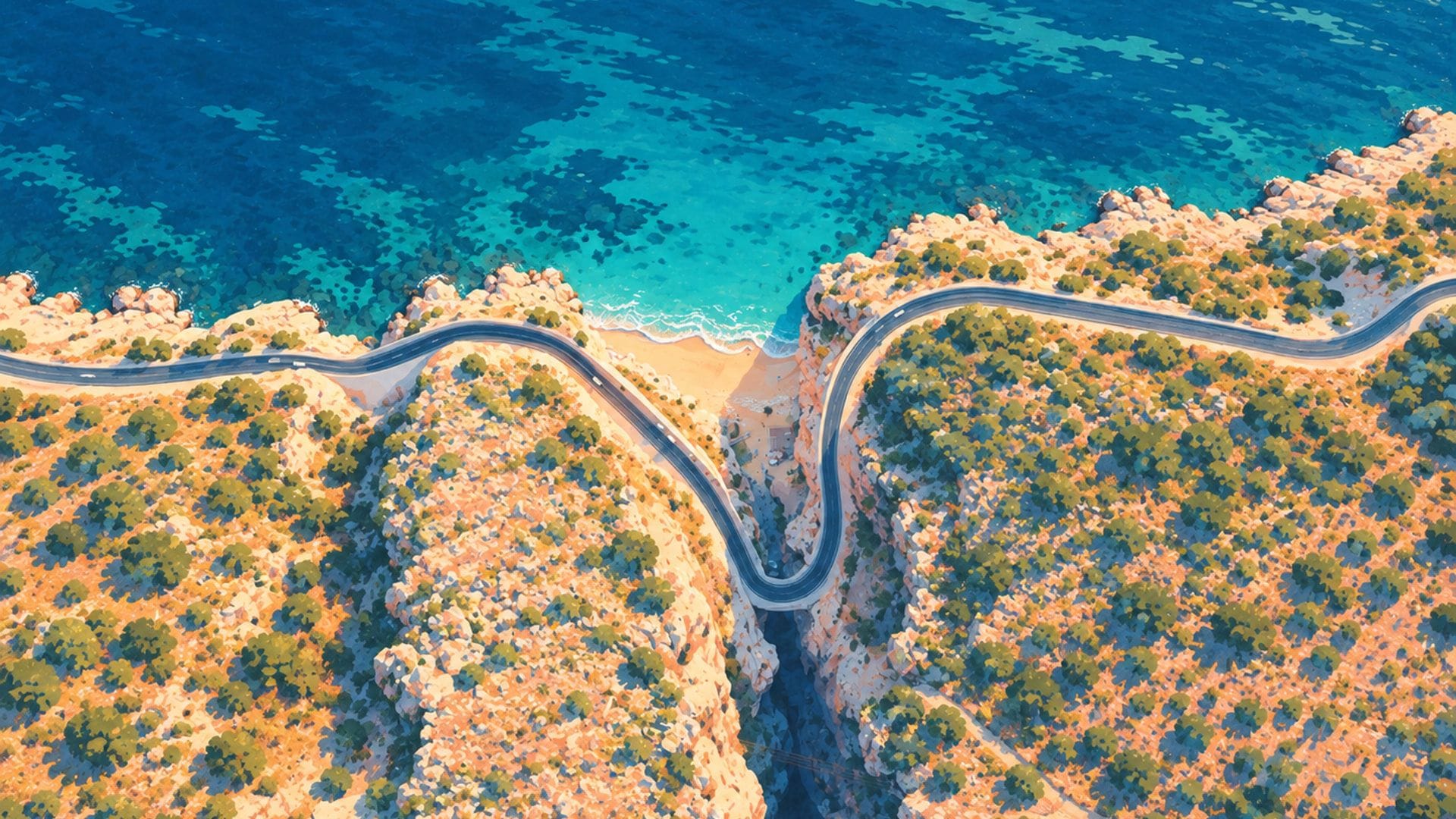
The most common route is the D400 coastal highway heading west from Antalya. The drive is approximately 150 km and takes 2 to 2.5 hours depending on traffic and how many photo stops you make — and you will want to make some. The road follows the coastline through Kemer, skirts the mountains above Olympos and Chimera, passes through Finike, and then drops down into the Demre valley. The final 30 km from Finike to Demre is particularly beautiful: tight curves cut into the cliff face with open Mediterranean views to your left and pine-covered mountains to your right.
The D400 between Kumluca and Demre includes steep, winding mountain sections with sharp bends and limited visibility. Drive carefully, especially at night. Turkish drivers can be aggressive on these curves. If you’re not comfortable with mountain driving, allow extra time and stay in the slow lane. The road is well-maintained but unforgiving if you misjudge a bend.
There is a faster inland alternative: take the Antalya–Burdur motorway (O-31) north, then cut west and south through the mountains via Elmalı. This route is about the same distance but uses more motorway and fewer mountain curves. It is faster in winter when the D400 coastal sections can be wet and slow, but you miss the spectacular scenery. Unless you’re arriving late at night or in heavy rain, the coastal D400 is the better drive.
Car Rental
All major international firms (Avis, Hertz, Europcar, Budget, Sixt) and several Turkish companies (Garenta, Enterprise Turkey) have desks in Antalya airport’s arrivals hall. Prices in 2026 typically range from €25–50 per day for an economy car depending on season and advance booking. A manual transmission is cheaper than automatic — but automatic is worth the premium if you’re facing the D400’s mountain sections for the first time. Most rentals include basic insurance; check your credit card’s travel coverage before paying for supplemental packages.
Book online before you fly — walk-in prices at airport desks can be 30–50% higher. Turkish fuel (benzin) is expensive by European standards. Demre’s sites are close together (except Üçağız), so a small car is fine. Parking is free and easy at all archaeological sites and throughout Demre town. GPS/navigation works well — Google Maps and Apple Maps both have accurate routing for the area.
Bus
If you prefer not to drive, intercity buses connect Antalya to Demre. From Antalya’s main bus station (Antalya Otogar, also known as the Terminal), companies including Batı Antalya Tur run direct services to Demre several times daily. The journey takes approximately 3 hours with stops in Kemer, Kumluca, and Finike. Tickets are inexpensive — typically 150–250 TL one way in 2026. From Antalya airport to the otogar, take the Antalyakart tram (Havaş shuttle is another option) — about 30 minutes.
The bus drops you at Demre Otogar (bus station) in the town centre. From there, Myra Ancient City is 2 km north (walkable or a quick dolmuş ride) and St. Nicholas Church is 5 minutes on foot. Getting to Andriake and Üçağız without a car is significantly harder — see the “Getting Around Demre” section below.
Private Transfer
Several companies offer private airport transfers from Antalya to Demre. Prices in 2026 typically range from €80–120 for a sedan (1–3 passengers) and €100–150 for a minivan (4–7 passengers). The driver meets you at arrivals and takes you directly to your accommodation. Journey time is approximately 2.5 hours. This option makes sense if you’re arriving late, don’t want to drive an unfamiliar road after a long flight, or prefer to start your holiday without the stress of navigating. Your hotel or pension in Demre can usually arrange transfers — ask when you book accommodation.
From Dalaman Airport
Dalaman airport (DLM) is the western gateway to the Lycian coast, serving many charter flights from the UK, Germany, Scandinavia, and Russia. The distance to Demre is approximately 150 km — similar to Antalya — and the drive takes about 2.5 hours. The route heads east through Fethiye (or bypasses it on the Fethiye Çevreyolu ring road), continues through the Kaş road, and reaches Demre from the west.
The Dalaman approach offers a different kind of drive. Where the Antalya route is coastal and mountainous, the Dalaman route passes through the broader Eşen valley before climbing into the Lycian mountains between Kalkan and Kaş. The section between Kaş and Demre — a 40 km stretch of the D400 — is one of the most stunning coastal drives in Turkey, with the Greek island of Kastellorizo (Meis) visible offshore and dramatic cliff-edge switchbacks.
Car rental options at Dalaman are similar to Antalya — all major firms have desks in the arrivals hall. Bus connections from Dalaman to Demre are less direct: you typically need to travel to Fethiye Otogar first (shuttle or bus, ~1 hour), then take an onward bus to Kaş, and change for Demre. This multi-step journey can take 4–5 hours. A private transfer from Dalaman airport costs €90–130 for a sedan.
Both airports are equidistant from Demre. Antalya has more flight options and slightly easier road access. Dalaman has more charter flights from Northern Europe and the route passes through Fethiye and Kaş — so if you plan to explore those towns too, arriving at Dalaman and departing from Antalya (or vice versa) creates a natural coastal itinerary.
From Kaş
If you’re already on the Lycian coast, Kaş is the nearest resort town to Demre — just 40 km and 45 minutes by car on the D400. Many visitors base themselves in Kaş and make day trips to Demre, or combine both into a multi-day coastal exploration.
The Kaş–Demre road is beautiful. Heading east from Kaş, the D400 climbs through dry, rocky hillsides with sweeping Mediterranean views, passes through the small town of Kınık (ancient Xanthos is nearby), drops through a gorge, and enters the Demre valley — where the landscape transforms dramatically from arid mountain to lush greenhouse-covered plain. The contrast is striking: in twenty minutes of driving, you move from Kaş’s boutique-hotel coastline to Demre’s agricultural heartland.
Dolmuş (Minibus)
Regular dolmuş services run between Kaş and Demre throughout the day. Departures are roughly every 30–60 minutes from Kaş Otogar (bus station, near the marina). The journey takes about 45 minutes and costs approximately 200 TL in 2026. The dolmuş drops you at Demre Otogar in the town centre. This is a comfortable and inexpensive option for a day trip — just check the last return service (typically around 18:00–19:00) to avoid being stranded.
The last dolmuş from Demre to Kaş usually departs around 18:00–19:00, depending on season. If you miss it, you’ll need a taxi (expensive — 400–600 TL) or to find accommodation in Demre. Confirm the last departure time at Demre Otogar before heading out for the day. In peak summer the last service may run slightly later, but don’t count on it.
From Fethiye & Other Origins
Fethiye is approximately 170 km west of Demre — about 3 hours by car on the D400, passing through Kalkan and Kaş. Direct bus services run from Fethiye to Demre via Kaş, taking 3–3.5 hours with stops. Fethiye is a natural starting or ending point for a Lycian coast road trip that includes Demre.
From Istanbul, Ankara, or other major Turkish cities, the most practical option is to fly to either Antalya or Dalaman and then use the methods described above. Direct long-haul buses from Istanbul to Demre exist but take 10–12 hours — not recommended unless you enjoy overnight bus journeys. From Cappadocia (Kayseri or Nevşehir airports), short domestic flights to Antalya connect in about 1 hour, making a Cappadocia-to-Demre trip feasible in a single travel day.
Getting Around Demre
Distances Between Sites
Demre’s main attractions are not clustered in one place. Understanding the distances helps you plan your days efficiently.
| From → To | Distance | Time (car) | Dolmuş? |
|---|---|---|---|
| Demre Centre → Myra Ancient City | 2 km | 5 min | Yes (or walk, 25 min) |
| Demre Centre → St. Nicholas Church | 0.3 km | Walk | — |
| Demre Centre → Andriake / Çayağzı | 5 km | 10 min | Yes |
| Demre Centre → Üçağız (Kekova boats) | 35 km | 40 min | No regular service |
| Demre Centre → Sülüklü Beach | 8 km | 15 min | No |
| Demre Centre → Kaş | 40 km | 45 min | Yes |
| Demre Centre → Finike | 25 km | 25 min | Yes |
Local Dolmuş Routes
Demre has a small dolmuş network that covers the basics. Minibuses run regularly between the town centre (Otogar) and Myra Ancient City (2 km, useful if you don’t want to walk in the heat), and between the centre and Çayağzı/Andriake (5 km). These services run throughout the day with reasonable frequency — roughly every 20–30 minutes in season. Fares are 35–45 TL — well under €1.
The critical gap in public transport is the route to Üçağız. There is no regular dolmuş service between Demre and Üçağız — the 35 km mountain road simply doesn’t generate enough local demand. This means that without a car, reaching the Kekova boat tour departure point requires either joining an organised tour (which typically includes transport from Demre or Kaş), hiring a taxi (750–950 TL, about €15–17, one way), or hitchhiking (feasible in summer but unreliable). This single gap is the strongest argument for renting a car.
Walking & Cycling
Demre’s river plain is flat — perfect for cycling. The 5 km between the town centre and Andriake/Çayağzı is an easy, pleasant ride through greenhouse-lined roads. Some pensions and the Andriake campsite offer bicycle rental. Walking between Demre centre and Myra Ancient City (2 km north, slight uphill) is manageable in spring and autumn but punishing in summer heat. St. Nicholas Church is in the town centre itself, never more than a five-minute walk from anywhere.
Taxi
Taxis are available from the rank near Demre Otogar and can be called by phone. Fares are metered within town but often negotiated for longer trips. Approximate 2026 prices: Demre to Myra ~30–40 TL, Demre to Andriake ~50–70 TL, Demre to Üçağız ~750–950 TL (about €15–17) (a significant cost due to the mountain road). Agree on the price before departure for out-of-town trips. Taxis don’t typically wait at sites — if you take one to Üçağız, arrange a pickup time or take the driver’s phone number.
Car vs Public Transport — The Honest Comparison
People always ask me: “Do I really need a car?” My honest answer: if you’re staying two or more days, yes. Without a car, you can see Myra and the church easily — they’re in town. You can get to Andriake by dolmuş. But Kekova? That 35 km mountain road to Üçağız has no bus. And the road itself is half the experience — the first glimpse of the bay through the pines, the sudden blue of the Mediterranean after twenty minutes of mountain curves. You want to stop, take a photo, breathe it in. You can’t do that on a tour bus.
Here is the practical comparison, stripped of diplomacy:
✓ Complete flexibility — visit sites in any order, at any time
✓ Üçağız/Kekova accessible without tours or taxis
✓ Cost-effective for 2+ people (rental + fuel < taxi fares)
✓ Can reach hidden beaches (Sülüklü, Taşdibi)
✓ Evening runs to Üçağız for sunset dinner possible
✗ Parking is never a problem in Demre (free everywhere)
✗ Mountain roads require confidence
✓ No driving stress on unfamiliar mountain roads
✓ Budget-friendly if solo (dolmuş fares are cheap)
✓ Kaş–Demre dolmuş is comfortable and frequent
✗ Üçağız/Kekova requires organised tour or expensive taxi
✗ Sülüklü Beach and other remote spots inaccessible
✗ Last dolmuş returns early — evenings constrained
✗ Hot-weather walks between sites can be draining
For a single day trip from Kaş covering Myra and the church, public transport works fine — take the dolmuş in, walk between sites, dolmuş back. For two or more days exploring Demre properly, including Kekova, a car is not a luxury but a practical necessity. The exception is if you join an organised multi-site tour that handles all the logistics — these are widely available from Kaş and Antalya and cover Myra, the church, and a Kekova boat trip in a single day.
Practical Arrival Tips
One thing nobody tells you: the last 30 km from Finike to Demre — the most beautiful part of the drive — is also where your phone signal will get patchy. Download your Google Maps route before you leave the airport so it works offline. And don’t panic when you see the turnoff sign say “Kale” instead of “Demre” — some road signs still use the old name. Same town, same road, same destination.
Fill up your tank in Antalya, Finike, or Kaş before arriving. Demre has a couple of petrol stations on the D400 but they can be easy to miss. Fuel prices in Turkey are high — budget roughly 15–18 TL per litre for benzin (petrol) in 2026. A small car will use about 20–25 TL of fuel to drive from Demre to Üçağız and back.
Google Maps works accurately throughout the Demre area and correctly routes you to all major sites, including Üçağız. Apple Maps is also reliable. Turkish road signs use international symbols and are generally clear, though village names can be confusing if you’re not expecting them. The key landmark for orientation: the D400 runs east-west through Demre. Myra is north of the highway, Andriake/Çayağzı is south (toward the sea), and Üçağız is reached by a signed turnoff heading southwest into the mountains.
