Demre rewards planning. Its four major sites are spread across thirty-five kilometres and their opening hours, crowd patterns, and geography create a natural sequence that — if you follow it — lets you stay one step ahead of the tour buses all day. Here are three itineraries: a packed single day that captures the highlights, a comfortable two-day plan that covers everything, and a three-day deep dive that turns sightseeing into genuine experience.
Before You Plan — What You Need to Know
Every itinerary below assumes you have a car. This is not a preference — it is the reality of Demre’s geography. Myra and St. Nicholas Church are in town, but Üçağız (Kekova boat tours) is 35 km away on a mountain road with no regular bus. A car transforms a logistics puzzle into a smooth flow. If you do not have a car, see the “Without a Car” section at the bottom for organised-tour alternatives.
Two timing rules underpin all three plans. First: start at 08:30 when Myra opens. Tour buses from Antalya and Kaş arrive between 10:00 and 14:00 — the early bird gets the ruins to herself. Second: drive to Üçağız before noon. Kekova boat tours depart throughout the day, but the water is calmest (and the sunken city most visible) in the morning and early afternoon.
The Turkish Museum Pass covers three of Demre’s four ticketed attractions: Myra Ancient City, St. Nicholas Church, and the Lycian Civilizations Museum at Andriake. Buying individual tickets for all three costs more than the pass. Buy the pass online before you arrive or at the first entrance gate. It also covers dozens of other Turkish sites if you are travelling further.
Day 1 — The Highlights Express
This is the itinerary I’d give my best friend if they had one day. I’ve walked this route hundreds of times — every timing, every transition is tested. The secret is starting at 08:30. By the time the first tour bus pulls into Myra’s car park at 10:00, you’ve already had ninety minutes alone with the tombs and you’re walking into the church while the guides are still unloading their groups.
Myra Ancient City
Arrive at opening and head straight to the River Necropolis — the larger and more impressive of the two tomb groups. The cliff face is in shadow at this hour, which softens the light for photography and makes the carved facades easier to read. Spend 30 minutes here, then walk down to the Roman theatre. Climb to the upper tiers for a panoramic view of the tombs, the valley, and (on clear days) the distant Mediterranean. By 09:30 you’ve seen the highlights; use the remaining time to explore the Sea Necropolis (smaller but less visited) and the fragments of the ancient agora near the car park.
St. Nicholas Church
Drive or walk to the church (it’s in Demre town centre, 2 km from Myra). At 10:00 you will still be ahead of the bus groups — they typically reach the church around 10:30–11:00 after their Myra stop. Inside, head directly to the apse to see the synthronon (semi-circular bishop’s seat), then find the fresco gallery in the northeast annex — the darkest and most overlooked part of the building, where 11th-century paintings depicting Nicholas’s life line the walls. The contested sarcophagus is in a side chapel behind a plastic barrier. Allow 45 minutes minimum; an hour if you read the interpretation panels.
Drive to Üçağız
Leave the church and head southwest on the D400, then take the signed turnoff toward Üçağız/Kekova. The 35 km mountain road is winding but scenic — pine forests, occasional glimpses of the bay below, and the first breathtaking reveal of Kekova Bay through the trees as you descend toward the coast. Stop at the viewpoint (unsigned, roughly 5 km before Üçağız, where the road curves and the entire bay opens up) for a photograph. You’ll arrive at Üçağız harbour around 11:40.
Quick Lunch in Üçağız
The waterfront restaurants in Üçağız serve fresh fish, grilled calamari, and simple mezze. Don’t overthink it — sit down at whichever table has the best view, order a mixed mezze plate and whatever fish is fresh, and eat looking at Lycian sarcophagi standing between the tables and fishing boats bobbing in the harbour. Budget 30 minutes; you want to catch a boat tour departing around 12:30–13:00.
Kekova Boat Tour
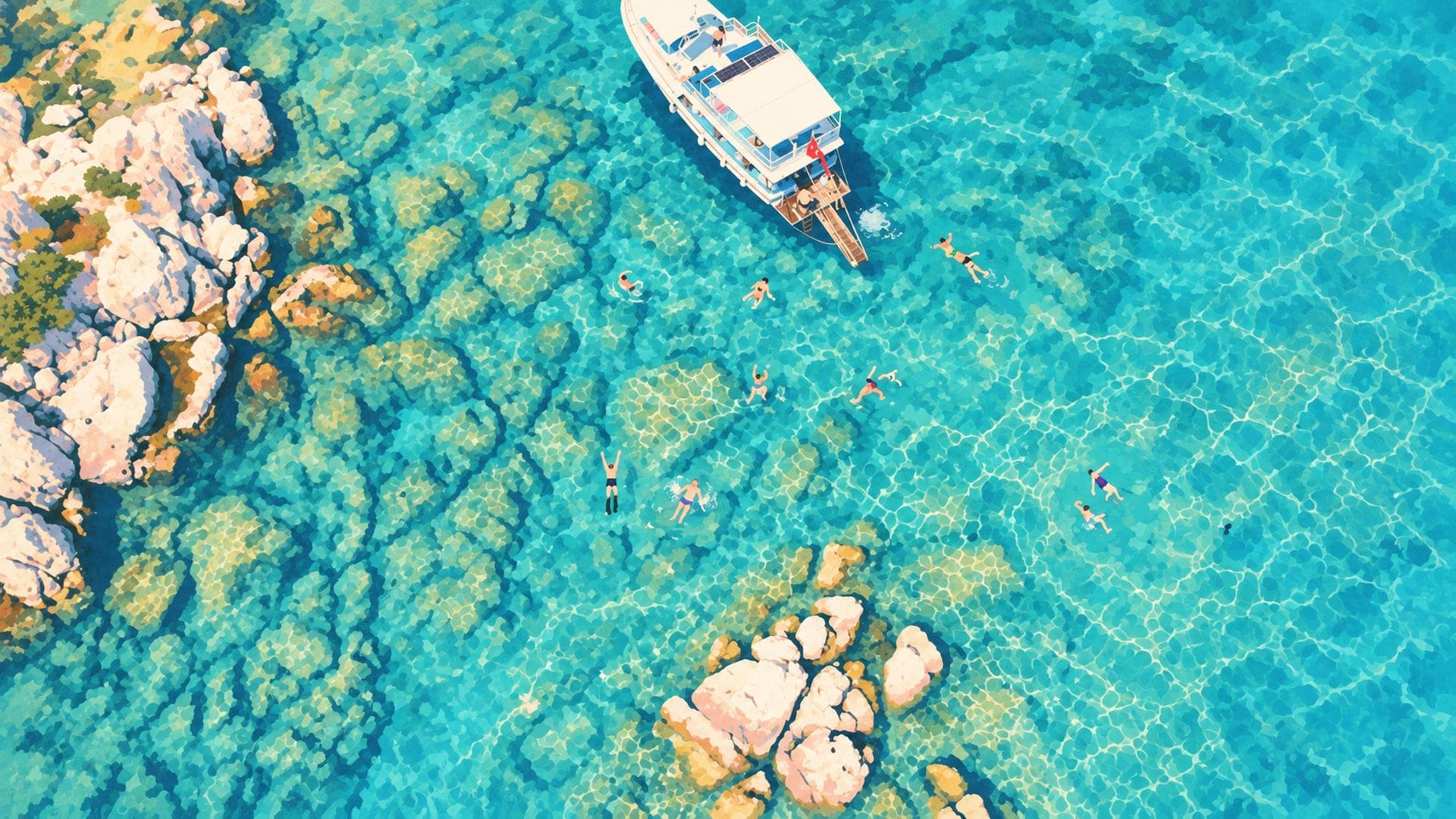
Join a group gulet tour or negotiate with a small-boat captain at the harbour. The standard route: Üçağız → slow pass along the sunken city shoreline (20–30 minutes of watching ancient walls and stairways beneath the clear water — bring polarised sunglasses) → Kaleöy/Simena (30-minute stop to climb to the castle, optional) → Tersane Bay (swimming stop, 30–45 minutes) → Akvaryum Bay (second swimming stop, some tours) → return to Üçağız. You’ll be back at the harbour between 16:00 and 16:30.
Fish Dinner in Üçağız (or drive back)
If you have the energy and the appetite, stay in Üçağız for an early dinner. The late-afternoon light is golden on the harbour, the tour boats have mostly gone, and the village settles into its evening quiet. A fish dinner at the waterfront — levrek (sea bass) or çipura (sea bream) grilled fresh, with a cold beer and the sound of the water — is the best possible ending to a one-day Demre itinerary. You’ll drive back to Demre (or Kaş) in the lingering twilight.
This plan covers Demre’s three biggest draws but skips Andriake, the Lycian Museum, and the beaches. If you have a second day, those are waiting for you.
Day 2 — Andriake, Museum & the Coast
Andriake Ancient City
Start at the outdoor archaeological site — the ancient harbour area with its synagogue foundations (one of the oldest discovered in Anatolia), Roman baths, agora, and the colossal restored cistern. The site is open-air and free to walk; only the museum inside the granary requires a ticket. Allow an hour to explore the ruins at a comfortable pace. The murex shell mound near the granary — remnants of ancient purple dye production — is easy to miss but fascinating once you understand what it represents.
Lycian Civilizations Museum
Enter through Hadrian’s Granary — the building itself is the first exhibit. Eight halls spread across the seven original grain storage rooms, housing 1,476 artefacts from across the Lycian region: pottery, jewellery, coins, glass, marble statuary, and a reconstructed ancient trading ship. The maritime hall and the harbour-life exhibition provide context for everything you saw at Kekova the day before — the underwater ruins, the sunken walls, the trading networks that once connected this coast to Egypt and Rome.
Çayağzı Beach
Walk (or drive 2 minutes) from the museum to Çayağzı Beach — a long sandy stretch beside the ancient harbour mouth. Swim, snorkel, or simply lie in the sun. Between May and September, Caretta caretta (loggerhead turtles) nest on this beach — look for the marked nest areas and keep your distance. There are a couple of simple beach restaurants and a çay ocağı (tea stall) for refreshments. No sunbed rental in the traditional sense — bring a towel and claim your spot.
Afternoon Options
The rest of Day 2 is flexible. Three suggestions:
Option A — Friday Market (if timing aligns)
If today is Friday, drive 5 minutes to Demre centre for the weekly pazar. Open from 07:00 to ~14:00 (but some vendors stay later). Greenhouse tomatoes, local honey, olives, spices, gözleme (stuffed flatbread), and a window into daily Demre life that no archaeological site can provide.
Option B — Sülüklü Cove
Drive 8 km from Andriake to Sülüklü — a small, sheltered cove with crystal-clear water, ideal for snorkelling. Less known, less crowded, and more striking than Çayağzı. Access is by car and a short walk down to the water.
Option C — Explore Demre Town
Walk through Demre centre: the main street with its small shops, the square where the Nicholas statue stands beside a more recent bronze bishop, the mosque, the çay bahçesi (tea garden) where farmers gather after work. Buy provisions for a picnic, find the bakery that makes fresh simit (sesame ring bread), and sit in the park watching daily life happen. This is the Demre that tourists driving between sites never see.
Evening — Dinner in Demre Centre
Eat at a lokanta (family-run restaurant) in the town centre. No English menu, no tourist markup — point at what looks good, sit down, and eat what the town eats. Pide (Turkish flatbread pizza), grilled meat, fresh salads with greenhouse tomatoes that taste better than anything you’ve had. Total cost for two: 300–500 TL including drinks. Your pension owner can recommend tonight’s best option.
Day 3 — Slow Demre
Day 3 is where Demre stops being a checklist and starts being a place you actually know. The first two days are about the sites — and they’re extraordinary. But the third day is about the town, the people, the rhythms. It’s about sitting in a tea garden with a farmer who can’t believe you stayed three days in his town, or walking through an orange grove in the late afternoon light, or watching the sunset from Çayağzı while the fishing boats come in. This is the day you’ll remember longest.
Day 3 is intentionally open and modular. Choose the option that matches your interest.
Option A — Kekova by Kayak
If the Day 1 boat tour showed you Kekova from above, a sea kayak shows you Kekova from inside. Paddle directly over the sunken city at water level — the ruins are close enough to touch (though you must not). Kayak tours depart from Üçağız, typically in the morning (08:00–09:00 start) to catch calm water. Half-day tours run 3–4 hours, covering the sunken city coastline, a stop at Kaleöy, and a swimming bay. Full-day options add lunch on the water and more distant coves.
Book in advance through operators in Üçağız or via online platforms. The physical demand is moderate — if you can sit in a kayak and paddle for two hours with breaks, you can do this. No experience required for guided group tours. The reward is immense: eye-level views of 2,000-year-old walls beneath the surface, the silence of a kayak versus the engine noise of a gulet, and photographs that are impossible to get from a tour boat.
Option B — Patara Day Trip
Patara is sixty kilometres west of Demre — about 75 minutes by car via the D400 through Kaş. It is the birthplace of St. Nicholas (born here c. 270 CE) and the site of the Lycian League’s parliament building (bouleuterion), making it the symbolic capital of the democratic federation that governed this coast. The archaeological site includes a triumphal arch, a Roman theatre, a colonnaded street, and extensive baths. Beyond the ruins, Patara has Turkey’s longest uninterrupted beach — 18 km of golden sand backed by dunes, protected as a Caretta caretta nesting habitat.
A Patara day trip fills Day 3 beautifully: drive in the morning, explore the ruins (1.5–2 hours), spend the afternoon on the beach, and drive back to Demre via the spectacular Kaş coastal road in the late afternoon. You can stop in Kaş for an hour on the way back — walk the harbour, see the Antiphellos theatre, grab an ice cream.
Option C — The Slow Day (Demre Itself)
No ruins, no boats, no itinerary. Just the town.
Breakfast & Town Walk
Sleep in. Walk to a kahvaltıcı (breakfast café) or let your pension serve you their full spread. Then walk. Demre’s town centre is small enough to cover on foot in an hour, but take two. Find the Roman-era water channel fragments behind the shops on the main street. Look at the two Nicholas statues in the square — the traditional bronze Orthodox bishop and the jollier Santa Claus figure — and consider what they say about how this town relates to its own history. Stop at the bakery for simit. Sit in the park.
Greenhouse Visit
If your pension or hotel can arrange it, visit a greenhouse. There is no formal “greenhouse tour” in Demre, but some farmers are willing to show visitors their operations, especially if approached through a local contact (your pension owner, for instance). Walking between rows of tomato plants in a plastic-roofed structure heated by Mediterranean sun is a strangely memorable experience — this is the agricultural engine that sustains the town, and almost no tourist has ever seen it from the inside.
Orange Groves & Final Swim
Drive or cycle to the orange groves between Demre centre and Andriake (especially beautiful October–March when the fruit is on the trees). Walk through on the unpaved farm tracks. If you’re here in spring, the blossom scent is extraordinary. Then head to Çayağzı for a final swim — or sit at the harbour tea stall and watch the Kekova tour boats come in, knowing that yesterday you were on one.
Last Dinner
Last dinner. Go to Üçağız if you want the waterfront, go to Demre centre if you want the lokanta. Either way, eat slowly, watch the sky turn colours, and think about the fact that people have been eating dinner on this stretch of coast for two and a half thousand years. The food is different, the language is different, but the light on the water is exactly the same.
Seasonal Adjustments
The itineraries above are optimised for spring and autumn (April–June, September–November). Here is how to adapt them for other seasons.
Summer (July–August)
Restructure Day 1 around the heat. Start at Myra at 08:30 as planned, but push harder: finish both Myra and the church by 10:30, then drive directly to Üçağız. Take the boat tour from 11:00 (earlier departure = calmer water + less crowded stops). Swim at Tersane or Akvaryum Bay in the midday heat — this is the best part of summer. Skip the Üçağız dinner and drive back to your air-conditioned room by 16:00. Eat in the evening when it cools down. For Day 2, visit Andriake’s outdoor ruins before 09:30, then spend the museum’s air-conditioned interior during the hottest hours, and beach from 15:00 onward.
Winter (December–February)
Ignore the boat tour. Kekova tours run year-round but winter departures are irregular and the experience is weather-dependent. Instead, spend Day 1 at Myra and St. Nicholas Church at whatever pace you like — there are no crowds, no time pressure. Use the time saved to visit Andriake the same day. On Day 2, drive to Üçağız and walk the coastal path to Kaleöy (30 minutes, Lycian Way marked, spectacular even in winter) rather than taking a boat. If December 6 falls during your visit, attend the St. Nicholas Day ceremony — the town’s biggest annual event.
Without a Car
If you do not have a car, the most practical option is an organised day tour from Kaş or Antalya. These typically cover Myra, St. Nicholas Church, and a Kekova boat tour in a single day, with transport included. Prices range from 600–1,200 TL per person depending on group size and operator. The tours are efficient but rushed — you get 30–45 minutes at Myra (not enough), 20 minutes at the church (barely enough), and a standard boat tour. The timing is set by the operator, not by you.
If you are based in Kaş without a car and want more independence, take the morning dolmuş to Demre (45 min, ~200 TL), walk to Myra and the church (both walkable from Demre otogar), then take the dolmuş back. For Kekova, you will need to join an organised boat tour from Kaş or Demre — reaching Üçağız independently without a car is impractical. Andriake is reachable by dolmuş from Demre centre (5 km), adding it to a Myra/Church day is feasible.
The last dolmuş from Demre to Kaş usually departs around 18:00–19:00. Confirm the time at Demre Otogar when you arrive. Missing it means an expensive taxi (400–600 TL) or an unplanned overnight. In summer the last service sometimes runs slightly later, but don’t gamble on it.
