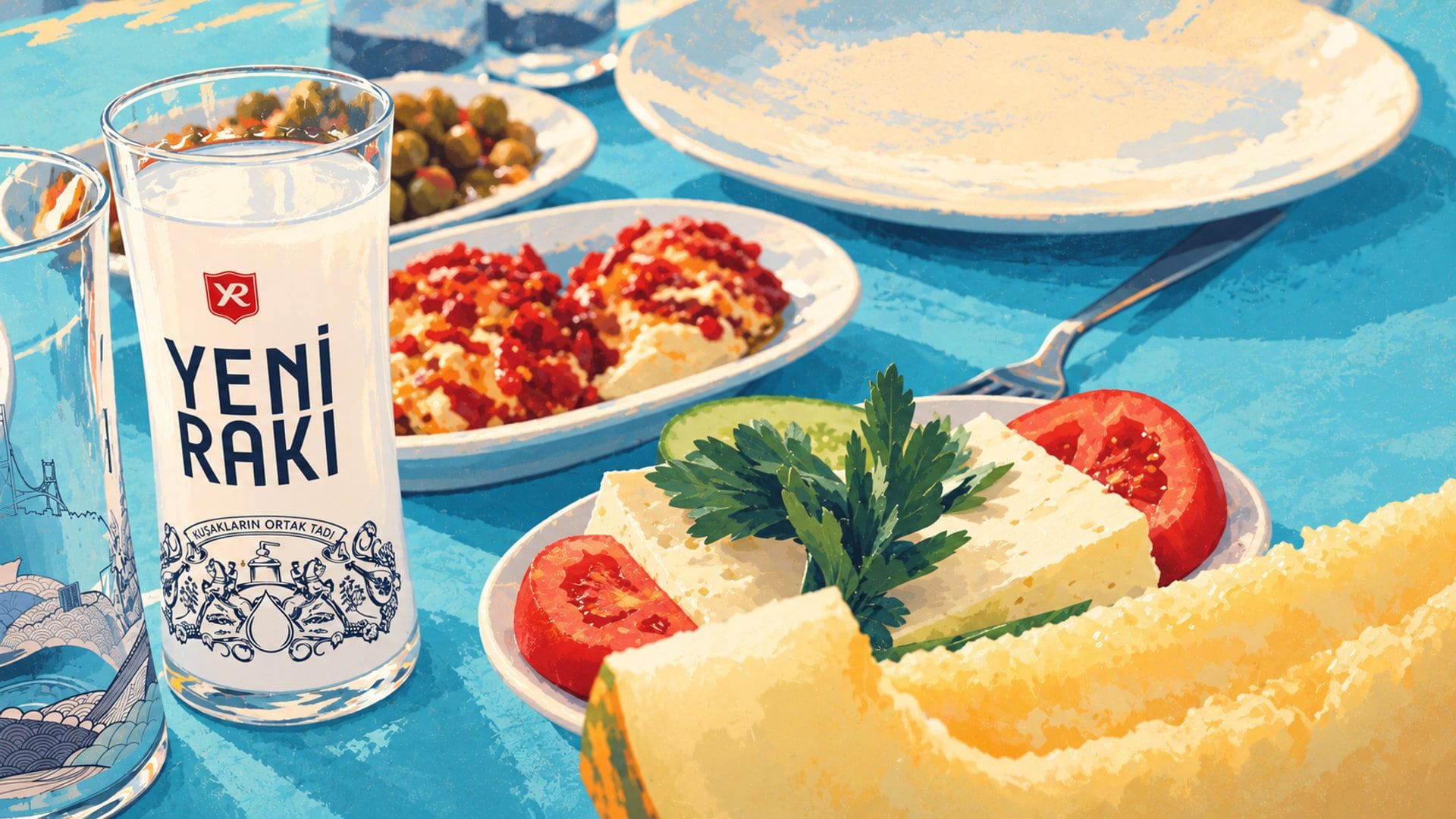
Demre is not a food destination — or at least, nobody has marketed it as one yet. There are no Michelin scouts here, no hipster brunch cafés, no Instagram-bait plates arranged with tweezers. What there is: a farming town where the tomato in your salad was picked this morning from a greenhouse three hundred metres from the kitchen, where the fish on your plate was swimming in the Mediterranean at dawn, and where a full lunch at the lokanta costs less than a single cocktail in Kaş. This is honest food, made by the people who grow it, in the place where it grows.
The Demre Pantry — Why the Food Tastes Different Here
Everything you eat in Demre starts in the valley. This is Turkey’s greenhouse capital — the flat plain between the Taurus Mountains and the sea is covered with plastic-roofed greenhouses producing tomatoes, peppers, aubergines, cucumbers, and herbs year-round. The result is a local food supply that is astonishingly fresh. The tomato in a Demre lokanta’s salad did not travel from a distribution warehouse — it was picked within the last twenty-four hours from a greenhouse you probably drove past on your way into town.
The flavour difference is real and immediate. Greenhouse tomatoes grown in Demre’s 300-plus days of intense Mediterranean sun have a depth and sweetness that supermarket tomatoes cannot match. The peppers — sivri (long green), dolma (bell-shaped), kapya (pointed red) — are used in everything from stuffed dishes to grilled sides to breakfast spreads. Olive oil comes from groves on the hillsides above the greenhouses. Honey is harvested from hives in the Taurus foothills. Oranges ripen in the remaining open groves between November and March, yielding fresh-squeezed juice at every breakfast table.
This is Anatolian Mediterranean cooking at its simplest and best: good raw ingredients, prepared without much fuss, served without pretension. It is not the elaborate cuisine of Istanbul or the spice-heavy cooking of the southeast. It is the food of farming families — honest, seasonal, and generous.
Must-Try Dishes
Dolma & Sarma — The Greenhouse Signature
If Demre has a signature dish, it is dolma — vegetables stuffed with a mixture of rice, minced meat, herbs, and spices. The star is biber dolması (stuffed peppers): plump green Demre peppers, grown in the greenhouses that surround the town, hollowed out and filled with a fragrant rice-meat mixture, then slow-cooked in a light tomato broth. The vegetarian version — zeytinyağlı biber dolma — uses only rice, pine nuts, and currants, cooked in olive oil and served cold. Equally essential is yaprak sarma: vine leaves wrapped around the same filling, rolled into tight cylinders, and cooked until tender. Every family in Demre has their own recipe; every pension serves their version at breakfast.
Zeytinyağlılar — The Olive Oil Tradition
Zeytinyağlı dishes — vegetables cooked in olive oil and served at room temperature — are the backbone of Demre’s everyday cooking. They are rarely on tourist menus but always at the lokanta’s steam table. Look for: fasulye (green beans in tomato and olive oil), enginar (artichoke hearts), bamya (okra), pırasa (leeks), and barbunya (borlotti beans). These are typically prepared in the morning, displayed under glass, and served at room temperature at lunch — the way generations of Mediterranean cooks have done it. Order three or four as a complete meal with fresh bread and you will eat better than most tourists in Turkey.
Pide & Lahmacun — The Quick Lunch
Every Turkish town has its pide salonu (pide parlour) and Demre’s are excellent. Pide is a boat-shaped flatbread filled with cheese (kaşarlı), minced meat (kıymalı), egg (yumurtalı), or combinations thereof, baked in a wood-fired or gas oven until the crust blisters and the filling bubbles. Lahmacun is thinner — a crispy round flatbread spread with spiced minced meat, rolled up with parsley and a squeeze of lemon. Both are fast, cheap (80–150 TL in 2026), and deeply satisfying. The pide salons in Demre centre cater to greenhouse workers on their lunch break, not tourists — which is precisely why the quality is high and the prices are low.
Fresh Fish — The Harbour Catch
Demre’s coast produces excellent fish. Levrek (sea bass) and çipura (sea bream) are the staples — farmed in the sea cages off the coast and wild-caught from the open Mediterranean. Kalamar (calamari), ahtapot (octopus), and karides (prawns) appear in mezze and as main courses. The freshest fish is served at the harbour restaurants of Çayağzı and Üçağız, where the catch comes in daily. Ordering protocol: walk to the fish display (a refrigerated counter or ice tray), point at what looks good, and the waiter will weigh it and quote a price per kilogram before cooking. This is standard practice, not a tourist trap — just make sure you see the price before you agree.
Seasonal Specials
Demre’s food changes with the calendar. In spring, wild herbs (kekik/thyme, dağ çayı/mountain tea) appear at the market. Summer brings the peak of greenhouse production — tomatoes and peppers at their most intense. Autumn starts the orange season: fresh-squeezed portakal suyu (orange juice) appears at every breakfast table from October to March, and the scent of orange groves fills the valley. Winter is the season for hearty soups — mercimek çorbası (red lentil), tarhana (fermented grain and yoghurt), and toyga (yoghurt and herb soup). The lamb and goat stews also deepen in winter, slow-cooked in clay pots by grandmothers whose recipes predate the greenhouses.
Where to Eat — A Geography of Taste
The best meal I’ve ever had in Demre was at a lokanta with no sign, no English menu, and no decoration beyond a calendar from the local tractor dealer on the wall. I walked in because it was full of farmers at lunchtime. The woman behind the counter pointed at six pots of food and I nodded at three of them. She brought a plate with beans in olive oil, stuffed peppers, and a shepherd’s salad. Total cost: 120 TL. Total satisfaction: immeasurable. The rule is simple — eat where the locals eat.
Demre Centre Lokantas
A lokanta is a family-run restaurant serving home-style Turkish food, usually from a steam table (bain-marie) or display counter. You look at the pots, point at what you want, and it arrives at your table with bread and (usually) a glass of ayran. This is how most people in Demre eat lunch. The lokantas in the town centre, on or near the main street, cater to greenhouse workers, shopkeepers, and local families. They are cheap (150–250 TL for a full meal), fast, and authentic. English is rarely spoken but pointing and smiling works perfectly. Avoid anything with a menu in four languages and photos of the food — that is a restaurant for tour buses, not for eating well.
Pide Salons
Demre has several dedicated pide houses, mostly in the town centre. These are no-frills environments — formica tables, fluorescent lights, paper napkins — where the pide is magnificent and the prices reflect the fact that the customers are locals earning local wages. A kaşarlı pide (cheese-filled) or kıymalı pide (minced meat) with a glass of ayran is one of the best value meals in the region. Look for the places that are busy between 12:00 and 13:30 — that is the greenhouse workers’ lunch break, and they know which pide salonu is best this week.
Çayağzı Harbour Restaurants
At Çayağzı, the coastal area near Andriake, a handful of fish restaurants sit beside the harbour where fishing boats and Kekova tour boats dock. The setting is casual — tables on a terrace or platform overlooking the water. The fish is fresh (ask what was caught today), the salads use local produce, and the view at sunset — Kekova Island’s silhouette against an orange sky, fishing boats in dark outline — is worth the slightly higher prices. Budget 300–600 TL per person for a fish dinner with mezze and a drink.
Üçağız Waterfront
Üçağız’s waterfront restaurants are the most atmospheric dining option in the Demre region. Tables sit at the water’s edge, between 2,300-year-old Lycian sarcophagi that no one has thought to move. Fishing boats drift in the foreground. Kekova Bay stretches beyond. The menu is fish-focused: mixed mezze (hummus, acılı ezme, stuffed vine leaves, fried calamari), followed by a whole grilled fish, with salad and bread. Prices are comparable to Çayağzı — perhaps 10–15% higher for the setting. The best time to eat here is late afternoon after the Kekova tour boats have departed and the village has settled into its evening calm.
The Üçağız dinner is the meal every visitor remembers. It’s not because the fish is dramatically better than Çayağzı — it’s probably the same fish. It’s the sarcophagi. It’s the sunset. It’s the quiet after the boats leave. You’re eating dinner in the same spot where Lycian fishermen ate dinner two thousand years ago. The plate is different, the language is different, but the water is the same water and the light is the same light. That’s worth the 35 km drive.
The Friday Market
Every Friday morning, Demre’s town centre transforms. Market stalls line the streets from roughly 07:00 to 14:00, selling produce directly from the greenhouse operators and small-scale farmers of the valley. This is not a tourist market — it is where Demre shops. The goods are practical: kilos of tomatoes, sacks of peppers, crates of cucumbers, bunches of herbs, alongside household items, clothing, and kitchenware.
For visitors, the Friday pazar is both a practical resource and a cultural experience. The practical part: buy fruit for the road (tangerines in winter, peaches in summer), pick up a jar of local honey (çam balı — pine honey from the Taurus hives — is exceptional), get olives and cheese for a picnic at Çayağzı Beach. The cultural part: watch how Demre’s farming community interacts, notice the social rituals of bargaining and tea-offering, and eat a gözleme (stuffed flatbread cooked on a convex griddle by a woman who has been making them for forty years) with a glass of ayran for about 60–80 TL.
One detail: prices at the pazar are already low by any standard, but they drop further in the last hour (13:00–14:00) as vendors try to sell remaining stock rather than carry it home. If you are not fussy about perfection — a slightly bruised tomato, an oddly shaped pepper — the end-of-market bargains are remarkable.
Drinks — From Çay to Fresh Orange
Tea is not a drink in Turkey — it is a social ritual. In Demre, çay is offered everywhere: at the pension, in the shop, at the petrol station, by the boat captain, by the carpet seller you have no intention of buying from. It arrives in a tulip-shaped glass, strong, dark, and usually with two sugar cubes on the side. Refusing tea is not rude, but accepting it opens doors. The town’s çay bahçesis (tea gardens) are the social hubs of daily life — where farmers decompress after a greenhouse shift, where deals are discussed, and where the town’s gossip circulates. Sit in one for thirty minutes and you will understand more about Demre than an hour in any museum.
Türk kahvesi (Turkish coffee) is available everywhere but less universally consumed than tea — it is an occasion drink, served after meals or to guests. Order it sade (no sugar), az şekerli (slight sugar), orta (medium), or çok şekerli (very sweet). Ayran — cold salted yoghurt drink — is the classic meal accompaniment, available at every lokanta and pide house. Fresh-squeezed portakal suyu (orange juice) is a Demre speciality from October to March, when the valley’s groves are heavy with fruit. Look for hand-painted signs reading “Taze Sıkılmış” (freshly squeezed) outside grocery shops and market stalls.
Demre is a conservative farming town and alcohol is less visible here than in Kaş or the Antalya resort strip. You will not find cocktail bars or wine shops. However, beer (Efes, Bomonti) and rakı (anise-flavoured spirit) are available at fish restaurants in Çayağzı and Üçağız, and at some of the larger hotel restaurants in Demre centre. Wine selection is limited. If an evening drink is important to your holiday, factor this into your accommodation choice — Kaş has a vastly wider bar and restaurant scene.
Vegetarian & Vegan Eating
Turkish cuisine is more vegetarian-friendly than most visitors expect, and Demre — as a vegetable-farming town — is especially well-suited. The zeytinyağlı tradition gives you a ready-made vegetarian (often vegan) repertoire: green beans, artichokes, okra, stuffed peppers (the rice-only version), aubergine dishes (imam bayıldı — “the imam fainted” — is a classic), and piyaz (white bean salad with onion, parsley, and sumac). Mercimek çorbası (red lentil soup) is on every menu, every day, everywhere — it is Turkey’s unofficial national dish and it is always vegan.
The challenge is communication rather than availability. The word “vejetaryen” is understood but “vegan” may not be — describe what you avoid rather than using a label. Say “etsiz” (without meat) and “sütsüz” (without dairy/milk) if needed. At lokantas, the simplest approach is to point at the zeytinyağlı pots — they are almost always meat-free. At pide houses, peynirli (cheese) pide is vegetarian; for vegan, ask for sadece sebzeli (only vegetables). At fish restaurants, the mezze spread — hummus, ezme (spicy paste), stuffed vine leaves (cold version is typically vegan), salads — can make a complete meal without ordering fish.
Say these at any lokanta or restaurant:
• “Etsiz var mı?” — Do you have anything without meat?
• “Zeytinyağlılar” — The olive-oil vegetable dishes (point at the counter)
• “Mercimek çorbası” — Red lentil soup (always vegan)
• “Piyaz” — White bean salad (vegan)
• “Sebzeli pide” — Vegetable pide (ask without cheese for vegan)
Most cooks will happily accommodate once they understand — they just might not have encountered the request before.
Prices & Tipping
Demre is one of the most affordable eating destinations on the Turkish Mediterranean coast — significantly cheaper than Kaş, Kalkan, or the Antalya resort strip. Here is what to expect in 2026:
| Meal Type | Typical Cost (per person, 2026) |
|---|---|
| Lokanta lunch (soup + main + salad + bread + drink) | 150–250 TL |
| Pide or lahmacun + ayran | 80–150 TL |
| Friday market gözleme + ayran | 60–80 TL |
| Fish dinner at Çayağzı (mezze + grilled fish + salad + drink) | 300–600 TL |
| Fish dinner at Üçağız (same, slightly higher for setting) | 350–700 TL |
| Çay (tea) | 15–25 TL |
| Turkish coffee | 40–60 TL |
| Fresh orange juice (seasonal) | 30–50 TL |
| Beer (Efes/Bomonti, 500ml) | 80–120 TL |
| Breakfast (if not included at pension) | 150–250 TL |
Tipping in Turkey is appreciated but not obligatory at Demre’s level of dining. At lokantas and pide houses, rounding up the bill or leaving 5–10% is generous. At fish restaurants in Çayağzı and Üçağız, 10% is standard if you are satisfied. At çay bahçesis, no tip is expected. At your pension, a tip at the end of your stay (100–200 TL for the family) is a warm gesture that is genuinely appreciated. Do not tip at the Friday market — it would be confusing.
Most restaurants and lokantas in Demre centre accept credit cards, but some smaller establishments and market vendors require cash (Turkish lira). In Üçağız, card acceptance is patchy — always carry cash. Çayağzı restaurants generally accept cards. ATMs are available in Demre centre; there are no ATMs in Üçağız or Kaleköy.
