Demre
Turkey's Most Layered Small Town
Where a 4th-century bishop became Santa Claus, a sunken city sleeps beneath turquoise water, greenhouses feed the nation, and 2,500 years of history hide in plain sight — welcome to Demre.
Where History Meets the Greenhouse
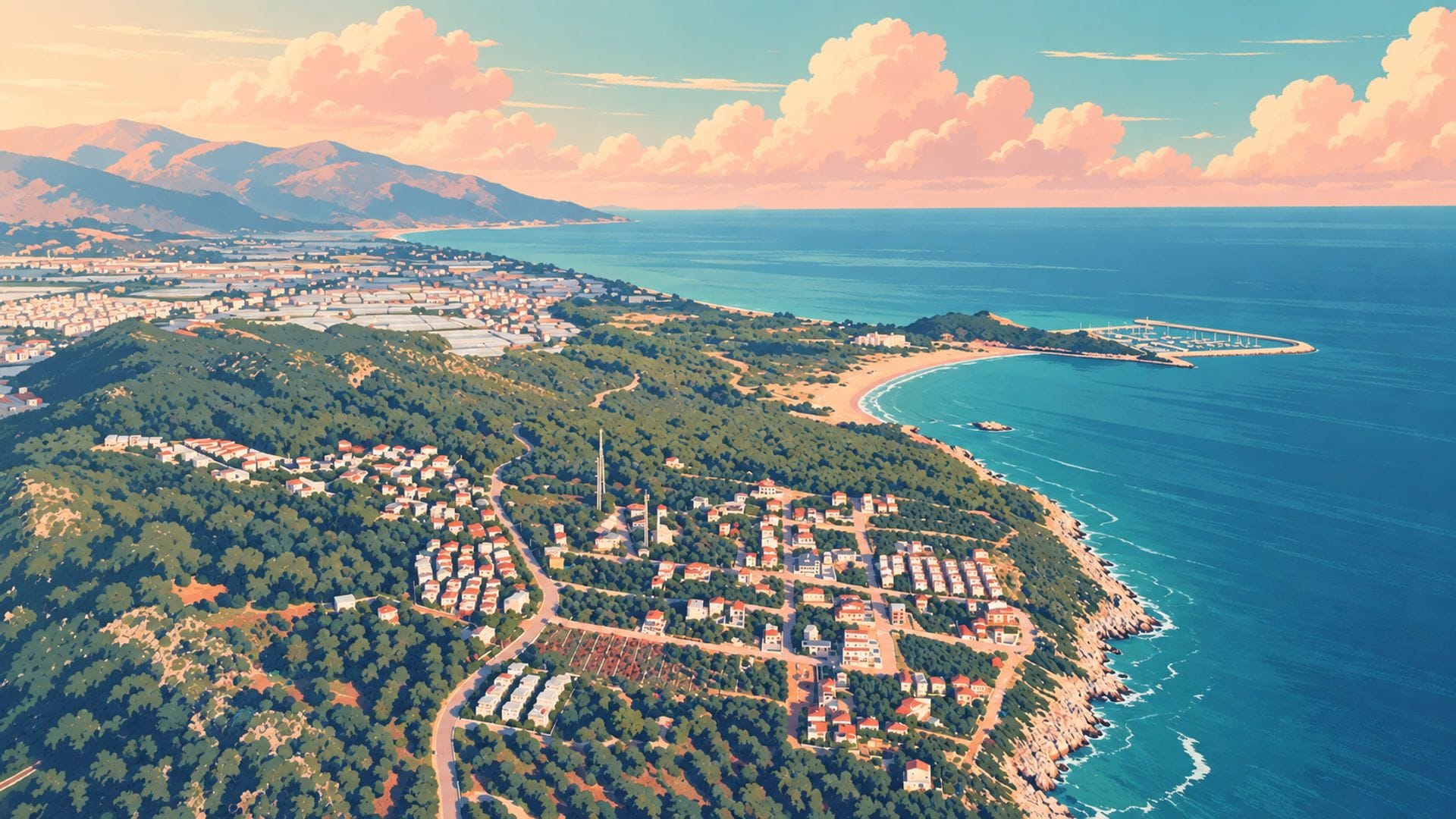
Demre is a small Mediterranean town on Turkey's Turquoise Coast, 150 kilometres west of Antalya, built directly over the ancient Lycian city of Myra. Four world-class archaeological sites sit within its district borders — a density of history found nowhere else in Turkey.
Those four sites tell a story that spans 2,500 years. At Myra Ancient City, monumental carved into cliff faces overlook a 10,000-seat Roman theatre — the stone seats where citizens of the , one of history's first democratic federations, gathered to debate and celebrate. At Kekova, a 2nd-century earthquake sank an entire coastal settlement into the Mediterranean, leaving ancient walls, stairways, and harbour foundations visible beneath crystal-clear water. The Church of St. Nicholas preserves the burial place of the 4th-century bishop whose generosity inspired the legend of Santa Claus — Byzantine frescoes still cover its interior walls. And at Andriake, Myra's ancient harbour, a colossal Roman granary has been transformed into the Lycian Civilizations Museum, housing 1,476 artefacts that bring the region's past into the present.
But Demre is not a museum. It's a working town where farmers tend greenhouses full of tomatoes and peppers alongside Roman aqueduct fragments, where fishermen mend nets beside Lycian sarcophagi, and where the Friday market sells produce grown in fields that were once part of an ancient city's necropolis. This is Turkey's greenhouse capital — a place that feeds the nation from plastic-covered fields stretching to the horizon, framed by snow-capped Taurus Mountains on one side and turquoise sea on the other.
What makes Demre extraordinary for visitors is precisely what keeps it off most tourists' radars: there are no resort complexes, no cruise-ship terminals, no all-inclusive wristbands. The hotels are modest, the restaurants are family-run, the prices are honest, and the locals are genuinely surprised — and pleased — when visitors stay more than a few hours. This is the Mediterranean coast as it used to be, and as it barely exists anymore.
The strangest thing about growing up in Demre is that history isn't something you go to see — it's something you walk past on the way to school. The corner shop where I bought ice cream as a kid sits thirty metres from a Roman-era water channel. My father's greenhouse borders a field where construction workers found column fragments last spring. People here don't treat 2,000-year-old ruins as attractions — they're just part of the scenery, like the mountains or the sea. I think that's what surprises visitors most: not the sites themselves, but how casually they exist alongside daily life.
Four Sites, One Town
2,500 Years in One Town
Practical Information
Tips for Your Visit
Explore Demre Further
Combine With Nearby Destinations
Frequently Asked
Without question. Demre packs four world-class archaeological and historical sites into a single small district — Myra Ancient City, Kekova's sunken city, St. Nicholas Church, and Andriake harbour. Unlike heavily touristed spots on the Turkish coast, Demre retains its authentic Mediterranean character as a working farming town. Most visitors who come for a few hours wish they'd planned to stay longer.
A minimum of two days covers the highlights: Myra, St. Nicholas Church, and a Kekova boat tour on Day 1; Andriake, the Lycian Museum, and beach time on Day 2. Three to four days is ideal — it lets you add sea kayaking, a day trip to Patara or Kaş, the Friday market, and genuine time exploring the town at a Mediterranean pace. See our day-by-day plans →
Yes — modern Demre is built directly over the ancient Lycian city of Myra. The name Myra was used in antiquity and through the Byzantine era; the town was later known as Kale under Ottoman rule, and officially renamed Demre in 2005. The archaeological site with its rock-cut tombs and Roman theatre sits about 2 km north of today's town centre.
Very safe. Demre is a small, close-knit farming town where serious crime is extremely rare. The main practical concerns are summer heat (38–42°C in July–August), uneven ground at archaeological sites (wear proper shoes), and limited English in shops and restaurants outside tourist areas. Standard travel precautions apply, but Demre doesn't have the hassle culture of some larger resort towns. Practical info & safety tips →
Yes — several. Çayağzı Beach near Andriake is the most accessible, a long sandy stretch that's also a Caretta caretta (loggerhead turtle) nesting site. Sülüklü Cove has crystal-clear water ideal for snorkeling. Taşdibi is a quieter pebble beach on the Demre–Kaş road. Kekova boat tours also include swimming stops at Tersane and Akvaryum bays. Full beach guide →
Four things: the ancient Lycian city of Myra with its monumental rock-cut tombs, Kekova's sunken city visible beneath the Mediterranean, St. Nicholas Church (burial place of the bishop who inspired Santa Claus), and its massive greenhouse agriculture — Demre is one of Turkey's largest producers of tomatoes, peppers, and other vegetables.
Possible but limiting. Dolmuş (minibus) services connect Demre centre to Myra (2 km) and Çayağzı/Andriake (5 km). However, reaching Üçağız for Kekova boat tours (35 km) is very difficult without a car — you'd need an organised tour. Renting a car provides much more flexibility and is strongly recommended for stays of two or more days. Transport options →
April–June and September–November are ideal. Temperatures are comfortable for ruins exploration (20–30°C), the sea is swimmable from May, crowds are manageable, and prices are lower. July–August is very hot with peak crowds. Winter (December–February) is mild and virtually crowd-free — beautiful for photography and the annual St. Nicholas Day ceremony on 6 December. Month-by-month guide →