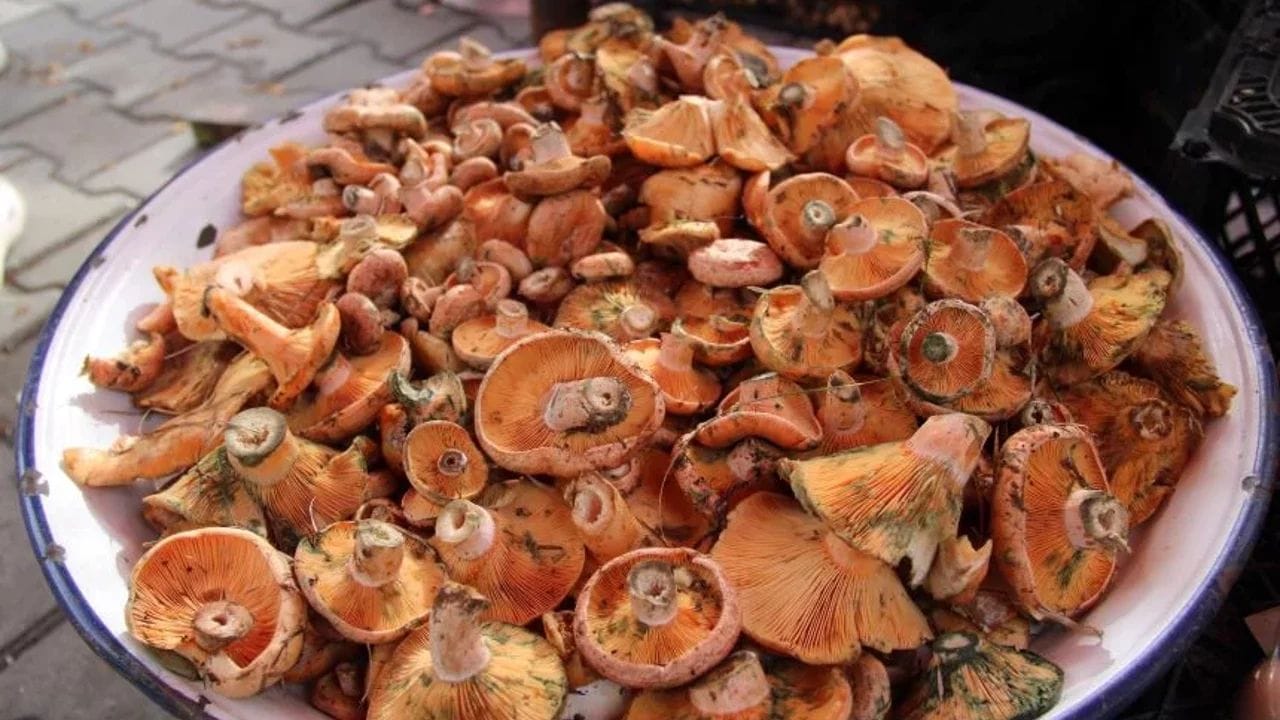
If you ask a tourist what Demre is famous for, they’ll say Santa Claus. If you ask a farmer, they’ll say tomatoes. But if you ask someone’s grandmother — the kind of grandmother who gets up at dawn after the first autumn rain and disappears into the pine forests above town — she’ll say çıntar. It’s a wild mushroom, it grows under Taurus Mountain pine trees after the rains come, and this month Demre officially asked the Turkish Patent and Trademark Office to recognise its çıntar dish as a product worth protecting.
What Happened
In March 2026, Demre Municipality filed an application with Turkey’s Patent and Trademark Office (Türk Patent ve Marka Kurumu) to register “Demre Çıntar Yemeği” — the Demre çıntar mushroom dish — as a geographical indication. The application is part of a broader campaign led by the Antalya Governor’s office and the Provincial Directorate of Agriculture and Forestry to secure geographical indication status for the region’s distinctive foods.
If approved, the Demre çıntar dish would join Antalya’s growing list of geographically protected food products — an official recognition that the dish is tied to this specific place, made with ingredients from this specific landscape, and prepared according to traditions rooted in this specific community.
What Çıntar Actually Is
Çıntar (CHUN-tar) is a wild mushroom — specifically Lactarius salmonicolor, a member of the milk-cap family. If you’ve eaten saffron milk caps in European cooking, you’re in the same botanical neighbourhood, though the Demre variety has its own distinct character. The locals also call it melki or kanlıca, depending on which village they grew up in.
It grows wild under Calabrian pine and stone pine trees in the Taurus Mountain foothills behind Demre. You cannot cultivate it — it appears only after autumn and early winter rains, pushing up through damp pine needle litter when conditions are right. The season is short and unpredictable: typically late October through December, sometimes stretching into January if the rains cooperate. A good rain followed by a clear sunny morning is the signal. By the time you read about it, the locals are already in the forest.
The mushroom itself is striking — a flat, funnel-shaped cap in vivid orange-red, with a firm, meaty texture and a smell that falls somewhere between earth and pine resin. When you cut it, it bleeds a saffron-coloured milk. It’s one of those foods that looks exactly like it should be poisonous and isn’t — though the experts are right to warn that distinguishing it from toxic look-alikes requires experience. Nobody in Demre learns çıntar identification from a book. You learn it from your grandmother, on the mountain, at dawn.
My father grows tomatoes and peppers in greenhouses — that’s the family business. But every November, when the first proper rain falls and the next morning dawns clear, he puts the greenhouse work on hold for exactly one day. He and my uncle drive up the mountain road behind Beymelek, park where the tarmac ends, and walk into the pine forest with plastic bags and pocket knives. They come back four or five hours later with three or four kilos of çıntar, grinning like they’ve found buried treasure. My mother takes over from there. She sautés the mushrooms with onion, garlic, green pepper, a spoon of tomato paste, and finishes with a knob of butter. We eat it with village bread, still warm. No restaurant in Demre serves it better than a kitchen table in November.
The Dish
The traditional Demre çıntar dish is simple in the way that all good regional cooking is simple — a handful of ingredients, no tricks, completely dependent on the quality of the main component.
Fresh çıntar is sliced into strips, sautéed in olive oil or sunflower oil with finely diced onion and garlic until the mushroom releases and reabsorbs its liquid. Green pepper and sometimes a red kapya pepper go in next, followed by a spoon of tomato paste for depth. Salt, black pepper, pul biber (red pepper flakes). A final knob of butter at the end — melted in, not cooked. Finished with flat-leaf parsley and served with lemon wedges and thick village bread, or alongside a bowl of bulgur pilaf.
That’s it. No cream sauce, no truffle oil, no deconstructed foam. Just the mushroom, the fat, the heat, and the bread. The flavour is earthy and faintly pine-scented — somewhere between a porcini and a chanterelle, but with a milky richness that is entirely its own.
Why the Bid Matters
A geographical indication is more than a label. It’s a legal statement that a food product belongs to a place — that the combination of soil, climate, species, and culinary tradition in one specific location produces something that cannot be replicated elsewhere. Parmigiano-Reggiano has one. So does Gaziantep baklava.
For Demre, the çıntar bid does something that most travel coverage of the town never does: it acknowledges that Demre has a living food culture that exists independently of its archaeological sites. The town is famous for ancient tombs and a fourth-century saint. It should also be known for the fact that its grandmothers go mushroom hunting in November.
For visitors, the practical implication is this: if you’re in Demre between late October and January, ask about çıntar. Your pension owner will know if the season has started. The Friday market may have vendors selling fresh çıntar by the kilo. Some lokantas in the centre serve çıntar dishes when the mushrooms are available — but only in season, and only when the rain has cooperated. This is not a menu item. This is a weather event you can eat.
If You Want to Try It
The çıntar season in Demre runs roughly from late October to January, with November and December being the most reliable months. Availability depends entirely on rainfall — a dry autumn means no mushrooms, full stop.
If you visit during season, here’s where to look: the Friday market (Cuma Pazarı) sometimes has vendors selling fresh çıntar, typically priced by the kilo. Local lokantas in Demre centre may offer çıntar dishes as a seasonal special — ask rather than looking at the menu, because it won’t be printed. Your pension or hotel owner is the best source of information: they’ll know whether the mushrooms are out this week.
Do not attempt to forage çıntar yourself unless you’re with someone who knows the local species. The edible çıntar has toxic relatives that look similar to untrained eyes, and Taurus Mountain forests are not the place to learn mushroom identification by trial and error.
For a broader look at Demre’s food culture — including the greenhouse produce, fresh fish, pide houses, and the Friday market that defines the town’s weekly rhythm — see our Demre food and drinks guide. For the agricultural story behind the greenhouses that produce the peppers and tomatoes served alongside the çıntar, see our agriculture article.
