Every few years, a headline lands: “Santa Claus’s tomb found in Turkey!” The international press picks it up, social media runs with it, and for about seventy-two hours Demre becomes the most famous small town on the Mediterranean. Then the news cycle moves on. But the archaeologists stay. They have been here for decades, working quietly in the annexes and foundations of St. Nicholas Church, and what they have uncovered over the past two years is more significant — and more carefully uncertain — than any headline suggests.
What Has Actually Been Found
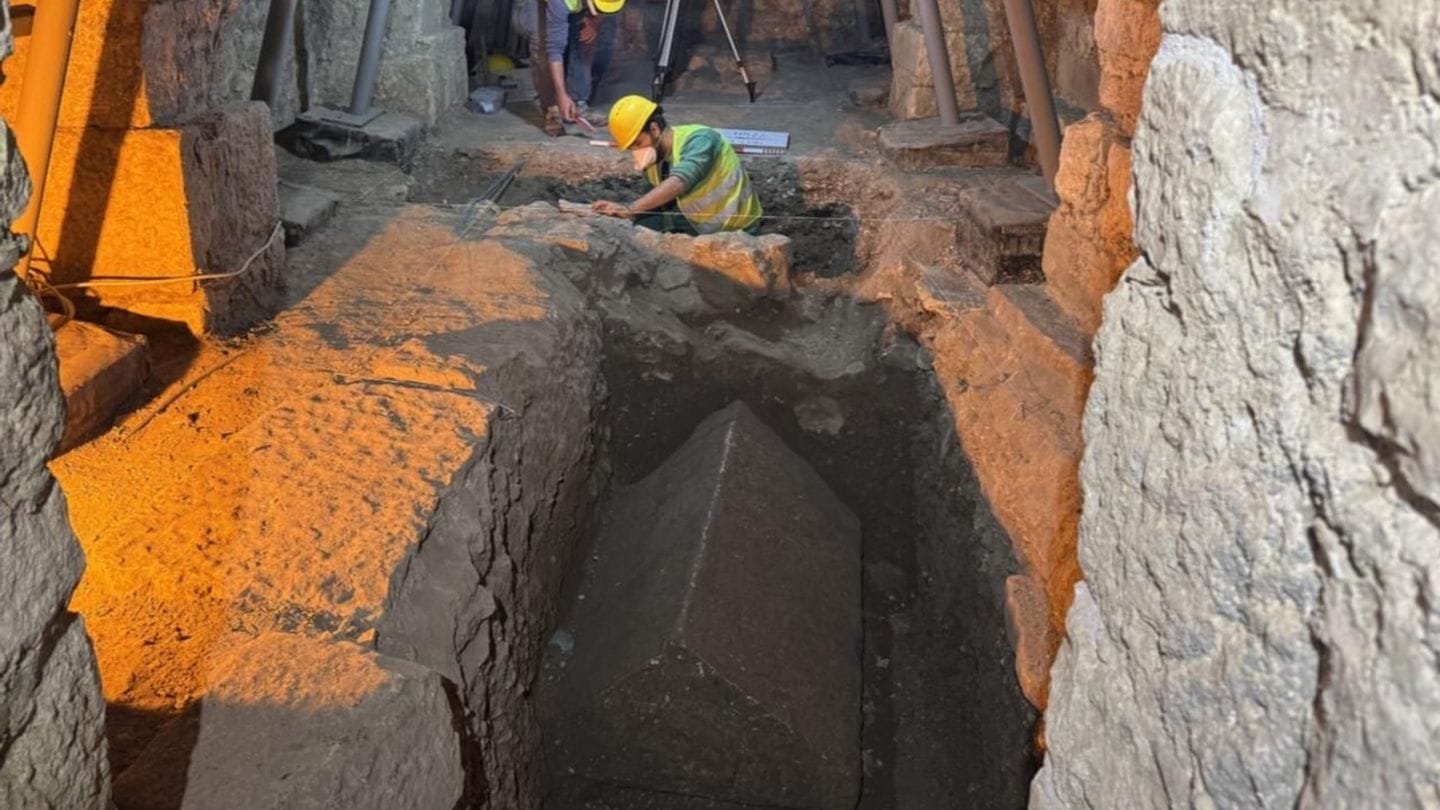
The excavations at St. Nicholas Church in Demre operate under the “Heritage for the Future” project, led by the Turkish Ministry of Culture and Tourism. The field director is Associate Professor Ebru Fatma Fındık of Hatay Mustafa Kemal University, and the work focuses on the church’s two-storey annex — a section that most visitors to the church never see.
Within this annex, the team has uncovered a limestone sarcophagus: roughly two metres long, with a pitched roof-shaped lid characteristic of the region’s burial traditions. Before reaching the coffin itself, they found animal bones and dozens of broken clay oil lamps — evidence of the kind of ritual commemoration that surrounded important burials in the late Roman and early Byzantine periods.
Separately, earlier phases of excavation exposed the floor level of the original fourth-century church — the building where Nicholas actually served as bishop. Osman Eravşar, then head of the Antalya Regional Board for Cultural Assets, described this as the first physical evidence from Nicholas’s own era, the surface his feet would have touched. Above this floor, in the church’s domed eastern section, a fresco of Christ making a gesture of blessing looks down on what archaeologists believe was the saint’s original burial spot.
A marble floor tile inscribed with the Greek word charis — grace — was found at this level. It may mark the precise location of the grave, though scholars outside the project have cautioned that such inscribed tiles were commonly reused in antiquity and may have been moved from elsewhere.
What We Don’t Know Yet
It is important to be precise about what has not been confirmed. Associate Professor Fındık has stated clearly that the team is searching for inscriptions on or around the sarcophagus that might identify who was buried inside. Birol İncecikoz, Turkey’s Director General of Cultural Assets and Museums, told the press that the location is consistent with historical accounts of Nicholas’s burial but added that the team is not yet declaring this as the saint’s tomb.
Carbon testing and other laboratory analysis are underway. Only detailed study of any remains inside the coffin can establish whether they date to the fourth century — and even then, connecting specific bones to a specific individual from 1,700 years ago is an extraordinarily difficult forensic challenge.
There is also the Bari question. In 1087, merchants — or raiders, depending on your perspective — from the Italian city of Bari broke into the church, opened Nicholas’s sarcophagus, and removed most of his skeletal remains. Those bones are now held in the Basilica di San Nicola in Bari. A smaller portion went to Venice. A bone fragment in the Antalya Archaeological Museum is believed to be genuine. Historical sources suggest that the Bari party may not have taken everything, which leaves open the possibility that some of the bishop’s remains never left Demre.
The newly discovered sarcophagus is not the same coffin that the Bari merchants broke into — that damaged sarcophagus is visible inside the church’s main nave and has been a visitor attraction for decades. This is a different burial, in a different part of the complex, and understanding its relationship to the known sarcophagus is part of the ongoing investigation.
When the sarcophagus story broke in December 2024, my phone lit up with messages from friends abroad: “They found Santa’s tomb?!” In Demre, the reaction was quieter. People here have watched archaeologists dig around the church for as long as anyone can remember. My uncle’s neighbour rents his spare room to excavation team members every summer. The kebab place across from the church entrance has served lunch to three generations of archaeologists. For Demre, this is not a discovery — it is the latest chapter in a very long, very slow story. But I will admit: when the carbon test results come in, even the locals will be paying attention.
Why It Matters — Beyond the Headline
For visitors planning a trip to Demre, the practical impact is limited for now. The excavation area within the annex is not accessible to the public, and the main sections of St. Nicholas Church — the nave, the frescoes, the damaged sarcophagus in the main hall — remain open as usual.
But the broader significance is considerable. If the carbon dating and any inscriptions confirm a fourth-century burial in this location, it would strengthen the case that Nicholas’s original grave has been located — and that at least part of his remains may still be in Demre rather than in Bari. For a town that has lived in the shadow of the 1087 relic theft for nearly a thousand years, that would be a meaningful resolution.
It would also transform the church’s status. St. Nicholas Church has been on the UNESCO Tentative Heritage List since 2000, and a confirmed connection to the saint’s burial could accelerate a full nomination. For the growing faith tourism sector along Turkey’s Mediterranean coast — particularly the Russian and Greek Orthodox pilgrim communities who already visit Demre in significant numbers — a verified burial site would become one of Christianity’s most important pilgrimage destinations.
And for Demre itself? The town has always had an ambivalent relationship with its most famous resident. The plastic Santa Claus statue that once stood in the town square, the serious Orthodox bishop’s statue that replaced it, the December 6 ceremony where a children’s choir sings while a man in a red costume hands out tangerines — Demre has never quite decided which version of Nicholas it wants to celebrate. A confirmed tomb won’t resolve that question. But it will ensure that the world keeps asking it.
What to Watch For
The carbon test results are expected in 2026, though no exact date has been announced. If you are visiting St. Nicholas Church this year, here is the current situation:
The main church interior is open to visitors during regular hours (check our St. Nicholas Church guide for current tickets, hours, and tips). The annex where the sarcophagus was found is closed to the public and is likely to remain so while excavations continue. The existing sarcophagus in the nave — the one broken by the Bari merchants in 1087 — is still visible behind a protective barrier.
If you visit the church with this story in mind, pay attention to the floor level. You descend several metres below the modern street to enter — that descent takes you through centuries of accumulated silt and earth, down to approximately the level where Nicholas walked. The fresco of Christ in the eastern apse looks down from above. The marble tile inscribed charis is somewhere beneath your feet. The church is not just a building; it is a cross-section of time, and right now, the deepest layers are the ones making news.
We will update this post when the carbon dating results are announced.
