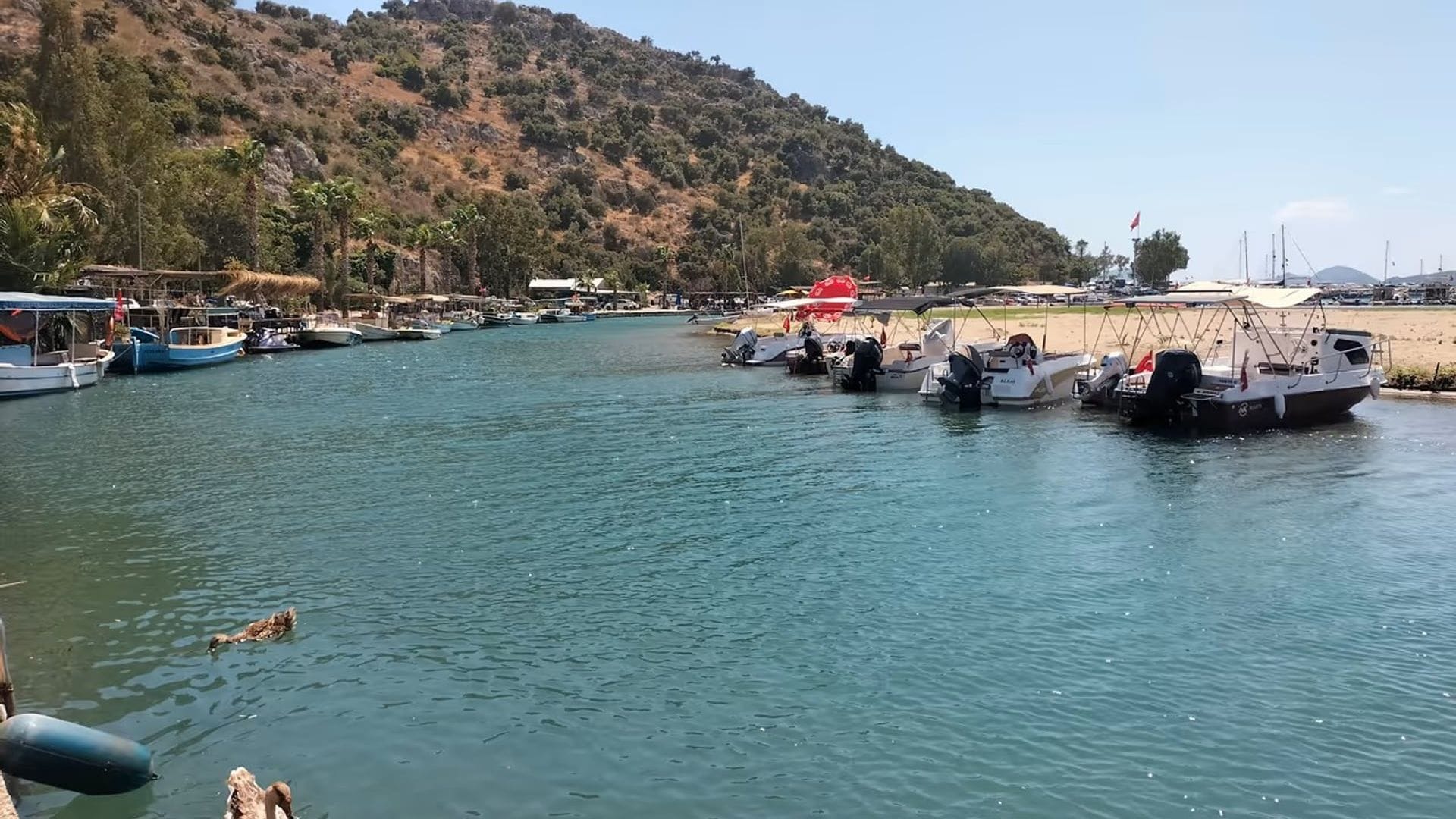
In London, where I live now, September is the month the year winds down: the light thins, the coats come out, and everyone talks about summer in the past tense. In Demre, where I grew up, September is the month the year begins. The greenhouses are being re-covered, the seedlings are going into the ground, the school bell rings again, and the sea — after four months of absorbing sun — is finally, properly warm. The tourists have just left. For roughly four weeks the coast belongs to the people who live on it, and the weather is better than anything July could offer. If I could only come home for one month a year, it would be this one.
The Week Everyone Leaves
There is a moment, usually in the first week of September, when Demre exhales. European school holidays end, the Antalya airport flights go home, and the change is not gradual — it happens over a single weekend. One Saturday the car park at Çayağzı is full and the boats out of Üçağız (ooch-ah-uhz) are running three abreast. The following Saturday the car park is half empty, and the Kekova boat tours are still leaving on schedule but with room to lie down on the deck.
What you get in exchange is the best weather of the year. The official numbers say September averages around 33°C and falls through the month, and that is true, but the number hides the important part: the humidity drops with it. The air that in August sits on the valley like a damp towel becomes dry, mobile, breathable. By the third week you can walk from the town centre to the rock tombs at Myra at 10:00 without planning your route around shade. In July you would not attempt that after 09:00.
And the sea. The Mediterranean lags the air by several weeks, so while the land is cooling, the water is at its annual peak — around 27°C. I have swum at Çayağzı at eight in the morning in mid-September and the water was warmer than the air. There is no other month where that happens.
The Year Starts in the Greenhouses
If you drive the valley road between Demre and Beymelek in early September, you will see something that looks, from a distance, like a town being rebuilt. Men on ladders. Rolls of new plastic the size of tree trunks. The white paint that shaded the sera roofs all summer being hosed off, so the glass-clear plastic underneath shows again for the first time since May.
This is planting season, and for a farming family it is the real new year. My father did not care about January. His year began when the fide — the seedlings, tomato and pepper mostly — arrived from the nursery in black plastic trays and had to be in the ground within a couple of days. The soil under the plastic has spent August baking under clear sheeting to kill off whatever was living in it; now it is turned over, ridged, threaded with irrigation pipe, and planted. Thousands of seedlings, spaced by eye, in rows my mother could walk down in the dark.
The whole town smells of it. New polythene has a particular sharp, clean scent, and for about ten days in September that smell is everywhere — on the road, in the pazar, on the clothes of every child at school. I remember my first week of secondary school, sitting in a classroom that smelled like a greenhouse because every family in the room had spent the weekend on a ladder. Nobody remarked on it. That was just what September smelled like.
For a visitor, none of this is on any itinerary, and that is exactly why it is worth seeing. The greenhouses are the reason Demre exists in its current form, and September is the one month you can watch them being born rather than simply passing them on the way to the ruins.
The first pomegranates arrive at the Friday market in the last two weeks of September, and my mother treats it as an event. She does not buy from the first stall. She walks the whole length of the pazar, picks up maybe fifteen pomegranates without buying any, and then goes back to one stall — usually the same old man from one of the villages up the mountain — and buys ten kilos. Her test is weight, not colour: a good nar should feel heavier than it looks. The rest of the year I can buy pomegranates in London that are bigger and redder and taste of nothing. Hers taste of September.
What’s on the Table
September is a hinge month for food, and you can taste it at the Friday market. The last figs of summer are still there in the first week, soft and slightly fermented by the time you get them home. Grapes come down from the villages in the hills. The pomegranates — nar — start to appear and by October dominate every second stall. The greenhouse tomatoes, by contrast, are at their thinnest: the summer crop is finished and the new one is still seedlings, so what you see is the last of the old plants or produce from the open fields. If you have read anywhere that the Demre tomato is a marvel, September is not the month to test the claim. Come back in February.
The fish is another story. With the tour-boat traffic gone from the bay, the small boats out of Üçağız and Çayağzı go back to fishing properly, and the waterfront restaurants that were reheating for two hundred covers in August are now cooking for twenty. The difference is on the plate.
The Honest Bits
I should say what September does not give you.
The first ten days are still hot. If you arrive on the 2nd expecting autumn, you will get August with fewer people. Plan your ruins for the morning until at least the middle of the month. The valley’s greenhouse heat island is real: Demre town runs a few degrees warmer than Kaş or the coast at Üçağız, and re-covered plastic reflects the afternoon sun straight back at you on the valley road.
The evenings turn before the days do. Somewhere around the 20th there is a night when you reach for a long sleeve at dinner by the harbour, and from then on you will want one. Pack for both.
Mosquitoes are worse in September than in July — the nights are humid enough for them and not yet cool enough to stop them. Bring repellent for any evening near the Andriake wetlands or the Beymelek lagoon.
And for walkers: the Lycian Way is not yet comfortable. The serious walking season on this stretch starts in October. In September the exposed sections above Kaleköy are still a heat problem after mid-morning, and the water sources on the high paths are at their driest.
If You’re Here Now
Swim early and swim often — the water will not be this warm again until next August. Çayağzı at 08:00 is the best hour of the day on the whole coast, and until the third week of the month the turtle nest markers are still up, so give them room.
Do the ruins before 11:00 and the sea after. Myra and the church can be done in a single morning without the sun becoming the story.
Go to the Friday market early, and go hungry. Buy pomegranates by weight, figs only in the first fortnight, and tomatoes from the open-field stalls rather than the greenhouse ones this month.
Drive the Beymelek road at least once in daylight, slowly, with the window down. It will smell of new plastic and turned earth, and it will tell you more about how this town actually lives than anything carved into a cliff.
For the month-by-month numbers — temperatures, sea, rain, crowd levels — the Demre weather guide has all of it. This post is just the part the numbers leave out.
