More Than a Departure Point
Most visitors pass through Üçağız in a rush — park the car, board the boat, spend the day on the water, drive home. The village barely registers as more than a car park with a jetty. That's a mistake. Üçağız is the gateway to Kekova, but it's also a destination in its own right: an ancient Lycian harbour city where 2,400-year-old sarcophagi sit in restaurant gardens, where rock-cut tombs line the waterfront, and where the UN just gave the village an international award for being exactly what it is.
The ancient name was Teimiussa. The modern name is Üçağız, sometimes written Kaleüçağız in official records. It was one of three Lycian settlements that ringed Kekova Bay — the commercial gateway where inland trade routes met the sea. Today it serves essentially the same function: the harbour where the boats are, the place where journeys into the bay begin.
But if you arrive an hour early, or stay an hour late — or better yet, spend the night — you'll find a village of perhaps 300 to 400 permanent residents, a single main road ending at the harbour, a handful of lanes branching off into stone houses and gardens, and an atmosphere that deserves attention on its own terms.
UNWTO Best Tourism Village 2025
In 2025, the United Nations World Tourism Organization selected Üçağız as one of the world's Best Tourism Villages — a programme that recognises communities using tourism to preserve heritage and sustain local livelihoods rather than displace them.
The selection criteria explain why Üçağız won: traditional architecture that hasn't been replaced by concrete hotels, ancient ruins integrated into daily life rather than fenced off behind ticket booths, a functioning local economy where fishing and agriculture coexist with tourism, and a sustainable scale — the village hosts visitors without being overwhelmed by them.
The award is a double-edged recognition. It celebrates Üçağız for being unspoiled — and simultaneously puts it on the international map in a way that could threaten that quality. Local authorities and residents are aware of the tension. The question isn't whether more visitors will come, but whether the infrastructure and regulations can channel that growth without destroying what the award was meant to honour.
Üçağız is not “undiscovered.” It's been on the Kekova boat-tour circuit for decades, and in summer it's busy with day-trippers from Demre and Kaş. But it has remained remarkably unchanged compared to places like Kaş or Kalkan, which were similar villages thirty years ago and are now fully developed resort towns. Whether the UNWTO award accelerates Üçağız's transformation or helps protect it is the question everyone here is asking. I hope it's the latter.
Ancient Teimiussa: The Ruins Around You
Teimiussa was the commercial hub of the Kekova Bay trio — the point where goods moved between inland Lycia and the maritime trade routes. As a member of the Lycian League, Teimiussa served as the bay's redistribution centre: timber from the surrounding hills, agricultural goods from the Lycian interior, and imported ceramics and metalwork from across the eastern Mediterranean all passed through its harbour. Unlike the submerged ruins of Dolichiste or the hilltop fortress of Simena, Teimiussa's remains are at ground level, scattered through the modern village and along its waterfront. There's no excavation site to visit — the ruins are simply there, woven into everyday life.
Rock-Cut Tombs
The most impressive concentration of ancient remains runs along Üçağız's eastern shore. A series of Lycian rock-cut tombs are carved into the low cliff face directly above the waterline — some with their bases now partially submerged due to the same tectonic subsidence that sank Dolichiste. These tombs date to the 4th–3rd century BCE and include both simple chamber tombs and more elaborate examples with carved architectural facades.
The tombs are freely accessible — you can walk along the shore path and examine them at close range. Several have inscriptions in Lycian script, though centuries of salt spray have eroded many to illegibility. The best-preserved examples are at the eastern end of the shore, away from the main harbour activity.
Sarcophagi in the Village
Lycian peaked-lid sarcophagi are scattered throughout Üçağız with a casualness that takes first-time visitors by surprise. Several stand in the gardens of waterfront restaurants — you eat your grilled fish two metres from a 2,300-year-old stone coffin. Others line the village road, sit at path junctions, or stand in the shallows of the harbour.
This isn't neglect — it's coexistence. The sarcophagi are too heavy to move (a typical Lycian sarcophagus weighs several tonnes), and the village grew up around them over centuries. The result is an archaeological landscape that feels lived-in rather than curated — a quality that almost certainly contributed to the UNWTO award.
The Hilltop Fortress
On the low hill behind the village sit the remains of a small fortification — probably Roman or Byzantine in date, though less studied than the much larger castle at Simena. The climb is short (5 minutes) and rewards with a view over the harbour and bay that orients you for the boat trip ahead.
The Boat Tour Departure Point
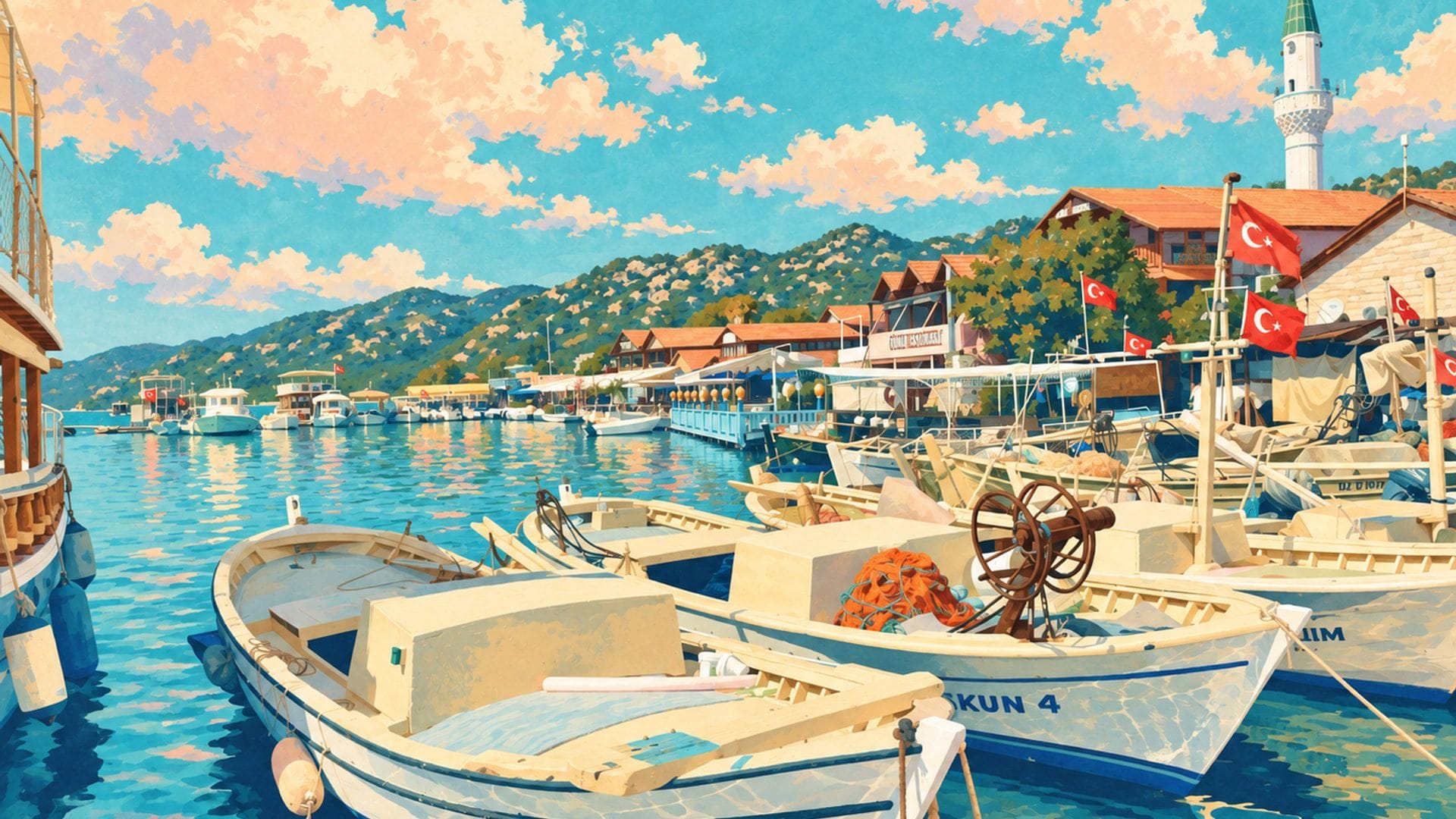
Üçağız harbour is where the vast majority of Kekova boat tours begin and end. On a summer morning, the harbour is a scene of organised chaos: captains calling for passengers, gulets being loaded with lunch supplies, smaller boats jockeying for position at the jetty, and clusters of tourists studying the hand-painted price boards propped against the harbour wall.
If you're joining a boat tour, arrive by 9:00–9:30 AM to have time to compare options and negotiate. The first boats typically depart around 10:00 AM. By 10:30, the harbour is largely empty — everyone is on the water — and the village settles into its quieter self.
For a detailed comparison of group gulet, small boat, and private charter options — plus prices, route details, and booking strategy — see our dedicated Kekova Boat Tours Guide →
Eating in Üçağız
The waterfront is lined with fish restaurants — simple, open-air places with tables at the water's edge, coloured lights strung between poles, and menus that depend on whatever the fishermen brought in that morning. The setting is extraordinary: you sit between Lycian sarcophagi, looking across the bay toward Kekova Island, while a waiter brings grilled levrek (sea bass) or çipura (sea bream) that was swimming in that same bay hours earlier.
What to order: grilled whole fish (priced by weight — ask the price per kilo before ordering), ahtapot (octopus) salad, kalamar (calamari), and a simple çoban salatası (shepherd's salad). For a lighter option, gözleme (stuffed flatbread) is usually available. Fresh-squeezed orange juice from Demre oranges is the default non-alcoholic drink.
Price level: expect to pay 20–40% more than mainland Demre restaurants — everything arrives by truck down a single road, and the waterfront setting is priced in. A full fish meal with salad and drinks typically runs 500–800 TL for two people. Cash is preferred at most places; some accept cards.
The best time to eat in Üçağız is after the boat tours return, around 5–6 PM. The lunch rush is over, the harbour is calm, and the light turns golden on the water. If you're staying overnight, a dinner here is the highlight — the tables are candlelit by 8 PM, the bay is dark except for boat lights, and you can hear the water against the harbour wall between conversations. It's one of those meals where the food doesn't need to be exceptional because the setting already is — but the fish is usually excellent anyway.
Where to Stay: Üçağız vs Kaleköy
Üçağız has more accommodation than Kaleköy — several pensions, small hotels, and guest houses with perhaps 80–100 beds total. The options range from simple rooms with shared bathrooms to more comfortable en-suite rooms with harbour views. Prices in summer run 1,500–3,000 TL per night for a double room, depending on the season and the view.
Üçağız advantages: easier access (car parking), more restaurant choice, better provisions (one small market), and the convenience of being at the harbour for early morning boat departures.
Kaleköy advantages: more atmospheric (car-free, castle above), quieter once the day boats leave, and the feeling of being genuinely remote.
Day-trip advantage: you keep your base in Demre or Kaş, drive to Üçağız, do the boat tour, and drive back. Most visitors choose this option. The trade-off is missing the village atmosphere at dawn and dusk.
There is no ATM in Üçağız. The nearest ATM is in Demre. Bring sufficient Turkish lira in cash for meals, accommodation, boat tours, and the Simena Castle entrance fee. Some restaurants accept credit cards, but many don't — especially the smaller operations and the boat captains.
Walking to Simena: The Lycian Way Path
The 30-minute coastal walk from Üçağız to Kaleköy (Simena) is one of the most rewarding short hikes in the region — and it's a marked section of the Lycian Way, Turkey's famous 540-kilometre long-distance trail that passes through the Demre region. The path leaves Üçağız from the eastern end of the village, follows the coast through olive groves and low scrubland, and arrives at Kaleköy's harbour from above.
Along the way you'll pass Lycian sarcophagi standing alone in the landscape, rock-cut tombs in the cliffside, and several viewpoints over the bay with Kekova Island stretched across the southern horizon. The path is well-marked with the Lycian Way's distinctive red-and-white trail blazes. Difficulty is moderate — some uphill sections on rocky ground, but nothing technical.
The strategy: walk to Kaleköy in the morning (you arrive before the boat tours), climb the castle at your own pace, eat lunch at the harbour, then take a small shuttle boat back to Üçağız (a few minutes, runs regularly in summer). This gives you both the walking experience and the boat perspective in a single morning.
Getting to Üçağız
By car: from Demre, take the D400 highway east toward Kaş. After approximately 20 km, turn south at the signposted Kılıçlı junction onto the Üçağız road. The remaining 15 km is a winding but well-maintained road through the hills, ending at the village. Free parking is available at the village entrance. Total driving time: approximately 40 minutes.
By dolmuş: there is limited minibus service from Demre to Üçağız, typically 2–3 departures per day in summer, fewer off-season. The schedule is unreliable — check locally. If you don't have a car, a taxi from Demre is approximately 750–950 TL (about €15–17) one way (negotiate in advance).
By organised tour: many Kekova boat tours departing from Demre include minibus transfer to Üçağız as part of the package.
