Before You Visit
Myra Ancient City is one of the most visited archaeological sites on Turkey's Mediterranean coast — yet most visitors arrive unprepared, visit at the wrong time, and miss half of what's there. This guide covers everything practical: what it costs, when to go, how to get there, and the details that make the difference between a rushed 30-minute stop and a genuinely rewarding 2–3 hour experience.
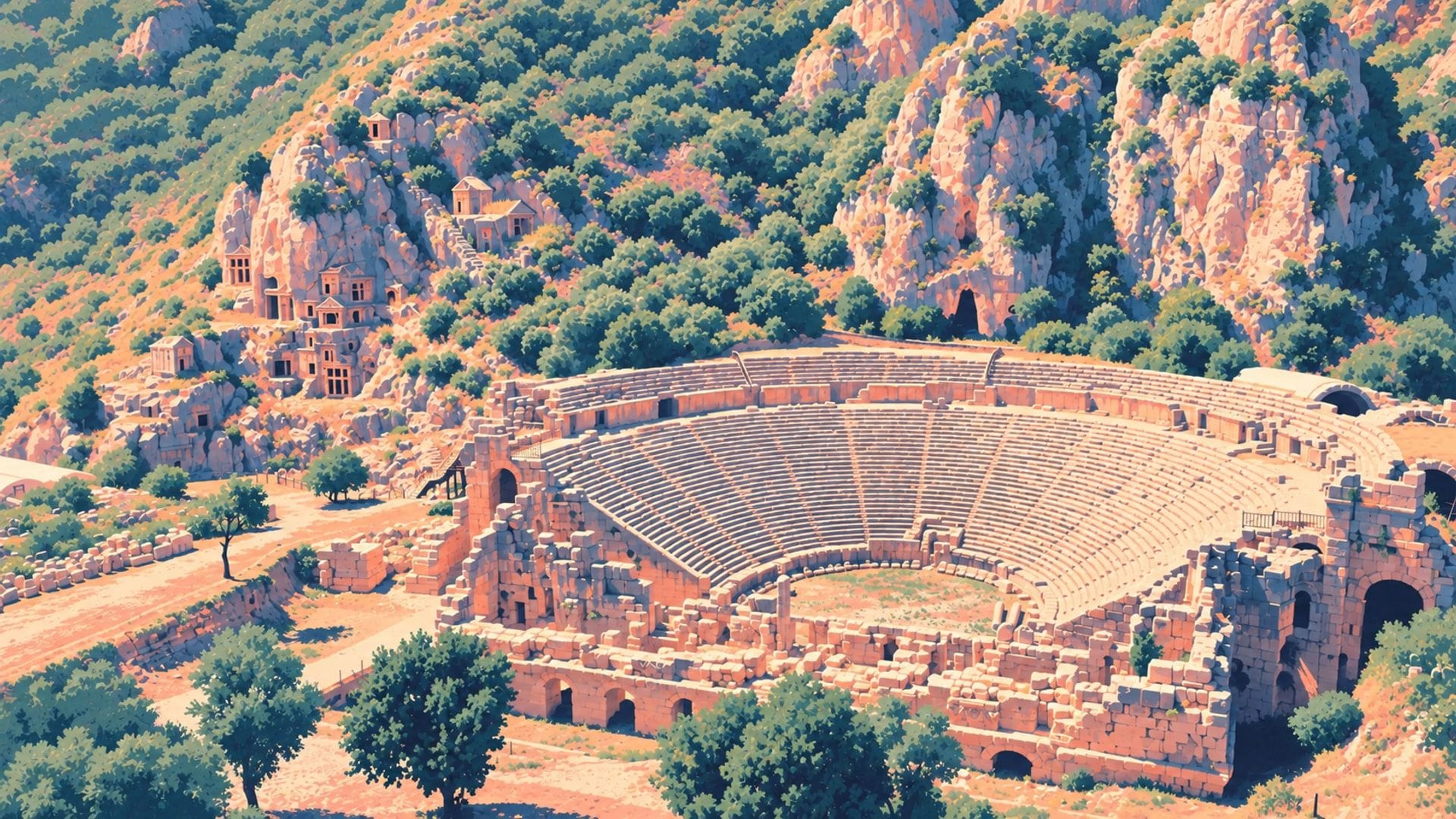
The archaeological site consists of two main areas — the Roman theatre and the river necropolis (rock-cut tombs) — located at the northern edge of modern Demre, about 1.5 km from the town centre. The theatre and tombs are within the same ticketed area, connected by a short gravel path that follows the base of the cliff. The theatre is one of the largest in Lycia, seating around 10,000 spectators, and the rock-cut tombs are carved directly into the cliff face above it — a concentration of ancient funeral architecture that rivals anything in the Mediterranean. St. Nicholas Church, the other major historical site in Demre, is a separate location in the town centre with its own ticket.
Entrance Fees & Tickets (2026)
Tickets are purchased at the gate — no online pre-booking is needed. Both cash and card are accepted at the ticket office. There is a single entrance point next to the car park, where you buy your ticket and walk directly into the site. The ticket covers the Roman theatre and both necropolis areas within the fenced archaeological zone.
The MuseumPass Türkiye E-Card (€165, valid 15 days from first use) is the smartest option if Demre is one stop on a wider Turkey trip. It covers both Myra and St. Nicholas Church, plus the Andriake Lycian Museum, Patara, Xanthos, and over 300 museums and archaeological sites across the country. If you are staying on the south coast, The Mediterranean E-Card (€90) is the cheaper regional alternative. You can purchase it online at muze.gov.tr or at any museum ticket office.
Prices are set by the Turkish Ministry of Culture and Tourism and change annually — usually every January. The prices listed here are for 2026. Check the official e-Müze website for the very latest figures before your visit.
Don't buy the Museum Pass at Myra's ticket office — the queue can be long, especially when tour buses arrive. Buy it online at muze.gov.tr before you arrive, or pick it up at the less crowded Antalya Museum or Andriake Lycian Museum. The Andriake museum is only 5 km from Myra and almost never has a queue.
Opening Hours & Best Times
Early morning (08:30–10:00) is the golden window — literally, as the cliff face catches the first sunlight and the rock-cut tombs glow with a warm amber hue that photographs beautifully. This is also the quietest time at the site. Tour buses from Antalya, Kemer, and Side typically arrive between 10:00 and 11:00, and the site stays crowded until about 14:00 when groups move on to lunch and Kekova. Late afternoon (16:00 to closing) is a second good window with softer, more dramatic light on the tombs and fewer people. The theatre faces roughly west, so afternoon light illuminates the seating rows and the mask reliefs on the stage building.
If you're here in July or August, visiting after 17:00 is not just about light — it's about survival. The site has almost no shade and temperatures regularly exceed 40°C. The theatre's stone seating absorbs heat all day and radiates it back at you. Bring at least a litre of water per person, wear a hat, and don't underestimate the Mediterranean sun on exposed rock. I've seen visitors leave after 10 minutes in midsummer because they came unprepared.
How to Get There
By Car
From Antalya: 150 km, about 2.5 hours via the D400 coastal road. The route follows one of Turkey's most scenic highways, winding through the mountains past Kemer, Olympos, and Finike before dropping into the Demre plain. From Kaş: 45 km, about 45 minutes along the D400 westward — a beautiful coastal drive with dramatic cliff views. From Fethiye: 130 km, about 2 hours via Kaş.
Free parking is available at the site entrance — an unpaved lot that holds roughly 50 cars. It gets full by 10:00 in summer when the tour buses arrive. If the main lot is full, there's a second parking option on the road leading to St. Nicholas Church, about 1 km south, from where you can walk or take a quick dolmuş ride.
By Dolmuş (Minibus)
Regular dolmuş service runs between Demre town centre and the site entrance (35–45 TL, 5 minutes, every 15–20 minutes during daytime). From Antalya: take a long-distance bus to Demre otogar (bus station), which takes about 2.5 hours, then catch a local dolmuş to the site. From Kaş: hourly dolmuş service to Demre (about 45 minutes, around 200 TL). The Demre otogar is centrally located, and dolmuş vehicles heading to Myra are clearly marked.
By Organised Tour
Many hotels in Antalya, Kaş, Kemer, and Side offer "Demre–Myra–Kekova" day tours. These typically include Myra, St. Nicholas Church, and a Kekova boat tour, all in one day. They're convenient and reasonably priced, but they're also rushed — usually only 30–45 minutes at Myra itself, which is barely enough time to walk through the theatre and take a few photos. If Myra is a priority for you, visiting independently gives you the time to properly explore.
For detailed transport from all directions — including airport transfers, driving tips, and dolmuş timetables — see the comprehensive Getting to Demre Guide →
What to Bring
- Water — at least 1 litre per person. There is no drinking water on site and the nearest shop is outside the gate.
- Sun protection — hat, sunscreen, sunglasses. The site has minimal shade and you'll be walking on exposed stone for most of your visit.
- Comfortable shoes — the terrain includes uneven stone surfaces, gravel paths, and steep stairs in the theatre. Sandals are possible but not ideal.
- Camera with wide-angle lens — the cliff face is enormous and the tombs extend across a wide panorama. A standard phone camera captures it well, but a wide-angle makes a real difference.
- Cash — for the small vendors outside the gate selling fresh-squeezed orange juice from Demre oranges, cold drinks, and simple snacks.
The fresh-squeezed orange juice stands outside the gate are genuinely good — Demre is one of Turkey's biggest citrus producers and the oranges are local. Expect to pay 20–30 TL for a glass. It's the real thing, not from concentrate. Skip the tourist shops selling mass-produced souvenirs — if you want authentic local products, the weekly market in Demre town centre (Fridays) is far better value.
How Long to Spend
Most guided tour groups rush through Myra in 30–45 minutes. That's enough to walk through the theatre and take photos of the tombs from the main viewpoint, but you miss the detail — the individual tomb carvings, the mask reliefs on the theatre's stage building, the upper seating rows with their panoramic views, and the quieter ocean necropolis area around the cliff's western face.
For a proper visit, plan for:
- Quick visit: 1 hour — Theatre exploration + main tomb viewpoint. Enough to see the highlights and take your photos.
- Standard visit: 2 hours — Theatre exploration + walking both necropolis areas + reading the information panels + time to sit in the upper theatre seats and absorb the atmosphere.
- Photography / deep visit: 3 hours — Early morning light on the tombs, different angles as the sun moves, climbing to the upper theatre seats, exploring the less-visited western necropolis area.
If combining with St. Nicholas Church (about 1 km walk through Demre town centre, or a 2-minute drive): add 1–1.5 hours for the church visit. A morning at Myra followed by lunch in town and an afternoon at the church makes for a satisfying half-day itinerary.
Accessibility & Facilities
The site has basic facilities — toilets at the entrance and a small refreshment kiosk just outside the gate. There are information panels in Turkish and English at key points throughout the site, and a site map is displayed near the entrance.
There is no wheelchair access within the archaeological site. The terrain is uneven ancient stone with loose gravel paths, stairs, and slopes. The theatre seating rows are original Roman stone — steep, narrow, and without handrails. The path from the theatre to the river necropolis is relatively flat gravel but unpaved and uneven in places. Visitors with limited mobility can view the tombs from the main entrance area without climbing, but the theatre interior requires navigating stone steps.
Museum Pass Details
The Museum Pass is especially valuable in the Demre–Kaş region, where paid archaeological sites are concentrated within a short driving distance. Visiting the four main sites in this area without the pass would cost: Myra (€13) + St. Nicholas Church (€17) + Andriake / Lycian Museum (€4) + Patara (€15) = €49. The Türkiye E-Card costs €165 and covers all of these plus every other paid museum and site in Turkey for 15 days — from Ephesus to Cappadocia's underground cities to the Topkapı Palace in Istanbul. On these four sites alone it does not pay for itself — it makes sense when Demre is one stop on a longer Turkey itinerary. For the south coast alone, The Mediterranean E-Card (€90) is the better-value option.
The pass is a physical card (or digital QR code if purchased online). At each site, you simply scan it at the entrance gate instead of buying a ticket. No separate booking or reservation is needed. The 15-day countdown begins the first time you scan it, not from the purchase date.
Combine Your Visit
Myra sits at the centre of a cluster of sites that combine naturally into half-day and full-day itineraries. Here's what's nearby and how the logistics work:
- St. Nicholas Church: 1 km walk from Myra, about 15 minutes on foot through Demre town centre (or 2 minutes by car). The church where the historical Santa Claus served as bishop. Allow 1–1.5 hours.
- Andriake & Lycian Museum: 5 km south of Demre, 10 minutes by car. The ancient harbour of Myra with Hadrian's Granary, now housing an excellent small museum. Allow 1–2 hours.
- Kekova boat tour: Departs from Çayağzı harbour, 7 km south of Demre. Morning or afternoon departures available. A full-day boat tour is the region's most popular excursion.
- Hidden Lycian cities: Kyaneai, Istlada, and Soura are all within 30–40 minutes' drive — atmospheric ancient cities with almost no other visitors.
For complete day trip planning — including five tested routes radiating from Demre — see our Day Trips from Myra guide →
